

Look, we’ve all been there. You spend hours setting up your stand, getting the feed just right, and walking away from a perfectly full hopper, only to return a week later and find the battery dead, the motor jammed, or the expensive corn you just bought dumped all over the ground by a horde of raccoons. When it comes to managing whitetail, consistency is everything. A broken feeder doesn’t just waste feed; it throws off your herd’s pattern and ruins your chances.
The short answer for hunters looking for a reliable, no nonsense solution without breaking the bank? The American Hunter deer feeder kits. They are the gold standard for hunters who want to convert a simple barrel or hopper into a rugged, fully programmable feeding system. They give you the essential features, reliable timers, decent motors, and an option for solar, in a single, affordable package.
If you are looking to replace a worn out motor, upgrade a basic gravity feeder, or build a custom setup from scratch, you’ve come to the right place. I have run these things for years in all types of conditions, and I know exactly which models are worth your time and which features you can skip. We are going to dive into the best models, talk through those critical “set it and forget it” features, and cover the simple tricks that keep these feeders running reliably all season long.
Why Choose an American Hunter Feeder Kit?
When you walk into a sporting goods store, you see dozens of complete deer feeders, often costing hundreds of dollars. So why are so many experienced land managers and serious hunters still buying a separate American Hunter deer feeder kit and building their own system? It boils down to a few key factors that are critical for long term field use.
First, you get versatility. American Hunter’s mounting plates are designed to be practically universal. Whether you are using a standard 30 gallon plastic drum, a repurposed metal barrel, or a purpose built plastic hopper, these kits usually bolt right on with minimal fuss. They give you total control over the setup.
Second, let’s talk price and performance. In the market, these kits sit squarely in the high value, budget friendly category. They deliver exceptional performance for the cost. Sure, you can spend twice as much on an industrial grade feeder, but for 90% of hunters managing their own land, the reliability and functionality of an American Hunter deer feeder motor and timer are more than enough. You are paying for proven functionality, not fancy branding.
Finally, the availability of replacement parts is a huge factor. These kits are so popular that if a storm knocks out your spinner plate or a component wears down after years of use, you can usually find the exact replacement motor, timer, or solar charger at almost any major retailer. That kind of dependability is golden when you are miles from a service center.
Top American Hunter Deer Feeder Models Reviewed
This is the core of your decision making process. The American Hunter lineup has a few key players, and picking the right one depends entirely on your specific setup, your budget, and how often you can get out to check on the unit. Here is a breakdown of the models I trust and why they earned their stripes in the field.
American Hunter R-Pro Feeder Kit (Best Overall Reliability)
If you are looking for the modern classic, this is it. The R-Pro is arguably the most popular American Hunter deer feeder on the market for a reason. It is built around a heavy duty metal housing and features a truly excellent digital timer.
The best feature is the programmable digital clock. You can set up to six different feed times a day, which is massive for creating consistent patterns. More importantly, the timer is intuitive and easy to use, even with cold fingers. It also features a “Varmint Guard” baffle system that makes it harder for coons and squirrels to reach the corn. In my experience, no system is 100% varmint proof, but this one definitely slows them down and minimizes waste. It is a solid choice for any serious manager.
American Hunter Sun Slinger Kit (Best Solar Integration)
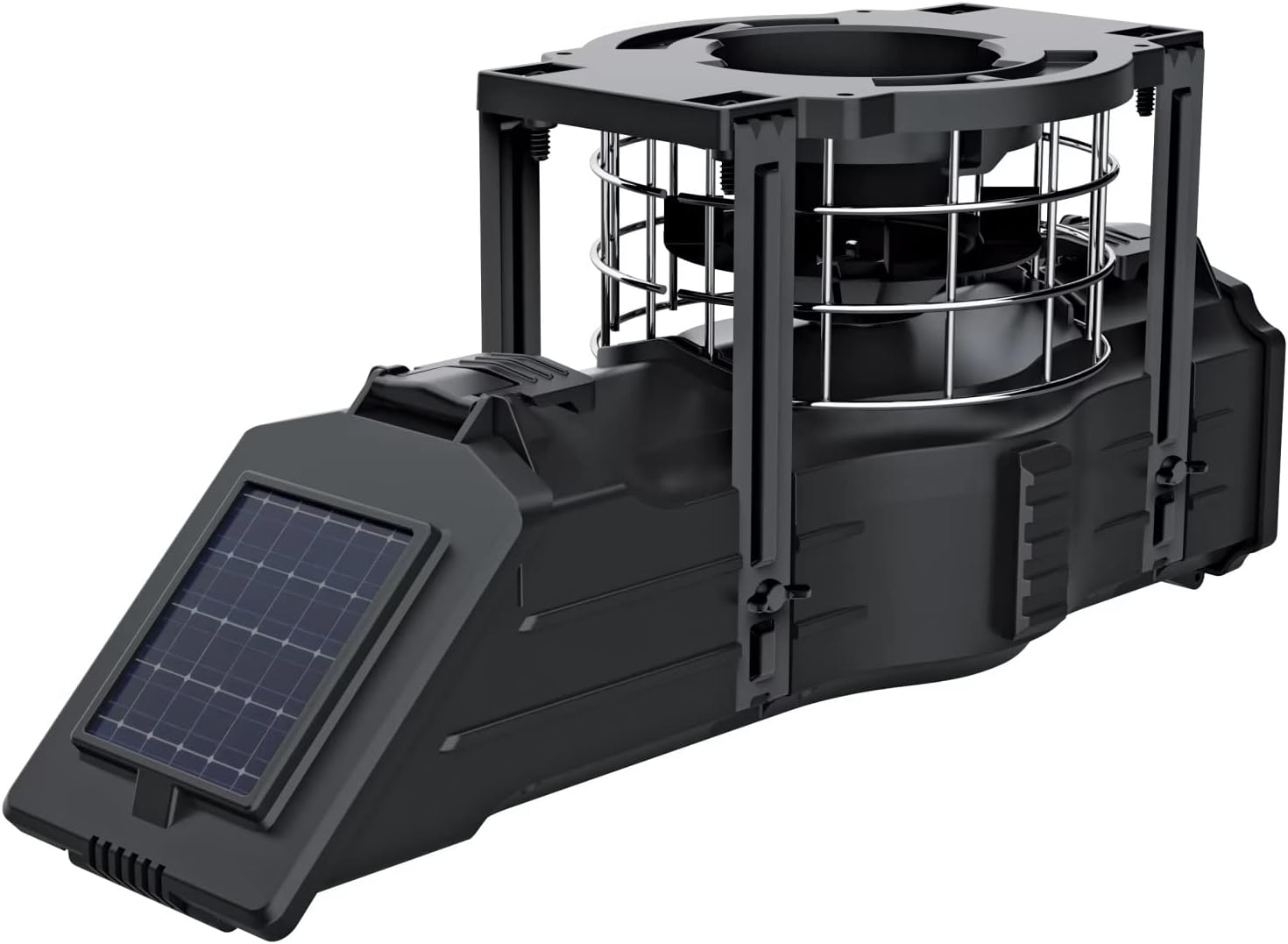
If your feeders are deep in the woods or on remote plots that you only check once a month, you absolutely must have reliable charging. The Sun Slinger is designed specifically for this scenario.
The biggest selling point here is the integrated solar charger. Instead of having a separate panel you have to wire up and mount, the Sun Slinger has the charger built directly into the housing. This eliminates exposed wires that can be chewed by rodents or damaged by weather. It is specifically designed to work with a 6 Volt battery, maintaining the charge through weeks of cloudy weather. If battery life is your number one concern, the Sun Slinger is worth the modest upgrade in price.
American Hunter XD-Pro (Best for Heavy Duty Use)
Sometimes you need a motor that can take a beating, especially if you are using heavier feed types or operating in harsh, rocky terrain. The XD-Pro answers that call. The “XD” stands for Extra Duty, and it earns the name with a robust, high torque motor and a thick, durable metal spin plate.
The standard American Hunter spinner is fine for corn, but if you mix in larger pellets or heavier feed, the XD-Pro’s powerful motor handles it without jamming or stalling. It also comes with the advanced digital timer, offering precise control over feed quantity. This model is ideal for high volume feeding operations or property lines where you need maximum throw distance.
American Hunter Analog Feeder Kit (Best Budget Option)
Not everyone needs a complicated digital screen and six feed times. Sometimes simplicity is reliability. The Analog kit is the most basic, entry level American Hunter deer feeder you can buy.
It uses a simple, mechanical dial timer, the kind with pegs you push in, to set the feed times. It is simple, reliable, and requires almost no maintenance. If you are a beginner, or just want a cheap, functional feeder to put on a small property where you only need one or two scheduled feeds per day, this is the perfect no nonsense option. It is the most affordable way to get a motor system running.
Custom Asset: American Hunter Feeder Kit Comparison (2025)
| Model | Timer Type | Best Use Case | Varmint Protection | Power System | Unique Feature |
| R-Pro | Digital (6 times/day) | General Reliability & Patterning | Built In Baffle | 6V Battery | Best balance of features and cost. |
| Sun Slinger | Digital (6 times/day) | Remote, Low Check Frequency | Built In Baffle | 6V Battery | Integrated Solar Panel eliminates wiring. |
| XD-Pro | Digital (6 times/day) | Heavy Duty, High Volume Feed | Heavy Metal Plate | 12V Battery | Higher torque motor for heavier feed mixes. |
| Analog | Mechanical/Pegs | Simple, Budget Setup | Basic | 6V Battery | Easiest to program and use; pure simplicity. |
Key Features to Look for in a Feeder Motor
Now that you have a sense of the top kits, let’s dig into the mechanical parts that really matter. When you’re choosing an American Hunter deer feeder model, you are essentially buying a timer and a motor. Knowing the differences between these components is what separates a successful feeding station from a frustrating one.
Here is what you need to pay close attention to before you bolt that motor plate onto your barrel.
Digital vs. Analog Timers
The timer is the brain of your feeder, and choosing between a digital display and an analog (or mechanical) timer comes down to how much control you need.
Analog Timers (The Simple Workhorse):
These use a rotating wheel or pegs. They are simple to set, incredibly durable, and almost immune to electronic glitches. If you only plan to feed twice a day, say, dawn and dusk, the analog timer is perfect. It is the most reliable option for basic operation.
Digital Timers (The Precision Tool):
The digital timers found on the R-Pro and Sun Slinger kits offer superior control. You can typically program six different feed times. This precision lets you fine tune your patterns. Want to throw a quick burst at 7:00 AM, a longer one at 5:30 PM, and a light midnight snack? A digital timer handles it easily. Just remember that digital models draw slightly more battery power than analog ones, even when idle.
Feed Rate and Duration
This feature determines how much feed is actually distributed. It is one of the most underrated controls on any American Hunter deer feeder.
Most kits allow you to adjust both the motor power (speed) and the duration of the spin (time).
- Duration: This is critical. Instead of just setting “5 seconds of feed,” you might want to set “3 seconds” for a light morning snack and “8 seconds” in the evening when the herd is really moving.
- Throw Distance: By adjusting the motor power, you control how far the corn scatters. If you are in a tight, brushy food plot, you need low power to keep the feed concentrated. If you are scattering across a large open food plot, max power helps spread it out, preventing deer from crowding the drop zone.
A good kit gives you these granular controls, letting you conserve expensive feed while optimizing the coverage area.
Varmint Guard Technology
If you are feeding corn, you are also feeding squirrels, raccoons, and hogs. This is a battle you will constantly fight.
The better American Hunter deer feeder kits incorporate some form of varmint protection right into the motor housing. This usually involves metal wire baffles or a cage that surrounds the spin plate.
While these factory guards are helpful, do not rely on them completely. They deter the casual varmint, but a determined raccoon will still find a way. For truly effective varmint control, you will likely need to add an external cage or skirt, but having the built in defense is a good starting point. The goal is not to eliminate them, but to make accessing the feed so difficult they move on to easier targets.
Power Source: 6V vs. 12V
The power system determines the long term performance of your feeder.
- 6 Volt Systems: This is the standard for most American Hunter kits. They draw less power, meaning a basic lead acid battery will last longer in the field. This voltage is sufficient for a normal throw distance.
- 12 Volt Systems: Found on the higher end models like the XD-Pro. A 12V motor provides more torque and speed. This is necessary if you are throwing heavy feed mixes, want maximum scattering distance, or are using a larger, heavier spin plate.
Solar Integration: If you are running 6V batteries, adding a small solar panel is the best investment you can make. The Sun Slinger is great because it is integrated, but you can also purchase a separate solar accessory to plug into almost any American Hunter deer feeder kit, dramatically extending your battery life between checks.
Installation Guide: Mounting Your American Hunter Kit
The American Hunter kits are designed to be user installed, but there are a few key tips from years of experience that will make the job much cleaner and ensure your feeder runs without a hitch. A sloppy installation is often the root cause of later jamming or power failure.
Step-by-Step Prep: Drilling and Mounting
Your feeder kit comes with a universal mounting plate, which is great, but the barrel or hopper needs to be properly prepared.
- Find the Center: This sounds obvious, but you need to find the dead center of the bottom of your barrel. Mark it clearly.
- Drill Smart: Use the mounting plate as a template for your bolt holes. Drill the holes for the bolts first.
- Cut the Drop Hole: Once your bolt holes are secure, use a template or the feeder plate itself to draw the main feed hole. This hole must be cut cleanly and slightly smaller than the diameter of your inner funnel or plate opening. The goal is to ensure the motor housing covers the hole completely, keeping rain and moisture out.
Always use the included washers and nuts to secure the plate snugly against the barrel. You do not want any movement or gaps where water can seep in.
Wiring Basics for Long Life
The wiring on an American Hunter deer feeder is simple, usually just two wires, red (positive) and black (negative), but proper connection is crucial for safety and longevity.
- Get the Polarity Right: Always connect Red to Red (positive terminal) and Black to Black (negative terminal). Reversing the polarity can fry your timer board, especially on the digital models.
- Secure the Wires: Use the included spade connectors and ensure they are crimped tightly to the battery terminals. Loose connections are the leading cause of intermittent feeder problems, especially on cold mornings when you need them to run perfectly.
- Use a Box: If your battery is sitting exposed, find a small, inexpensive battery box. It protects the terminals from moisture and, more importantly, prevents curious rodents from chewing the insulation off your wires.
The Funnel Factor
A lot of guys skip this, and it is a massive mistake. The funnel goes inside the barrel, directing the feed toward the motor plate opening.
Why the funnel matters:
- Prevents Bridging: Without a funnel, corn tends to stick to the flat edges of the barrel bottom, creating a “bridge” or void above the feed hole. The motor can spin for days, but nothing drops.
- Ensures Full Drop: The funnel keeps the feed volume constant directly above the spinner plate, ensuring that when your scheduled time hits, feed is immediately available to drop and be thrown.
You can buy a plastic or metal funnel accessory, but a basic, smooth plastic funnel installed correctly will guarantee the flow is consistent until the barrel is completely empty.
Troubleshooting Common American Hunter Feeder Issues
Even the best kits, like a reliable American Hunter deer feeder, can occasionally run into trouble in the rugged outdoor environment. Before you haul the entire unit back to your truck and swap out components, here are the most common field fixes that solve 90% of all feeder problems.
Feeder Motor Not Spinning
You hit the test button, and nothing happens. Here are the likely culprits, in order:
- The Simple Jam: The single biggest reason a motor stops is that a piece of corn dust or a pellet has wedged itself between the spinner plate and the motor housing.
- The Fix: Reach up and gently spin the plate by hand. You will often hear a crunch as the obstruction breaks free. Hitting the test button again should clear it.
- Corroded Terminals: Check the battery connections. If you see white or blue powder on the terminals, they are corroded.
- The Fix: Disconnect the battery and clean the terminals with a wire brush or fine sandpaper. Reconnect tightly.
- Low Voltage: Even if your battery has some power, the motor may not have enough voltage to overcome the friction of the corn and spin.
- The Fix: Test the voltage with a meter. If it is below 5.5 volts (for a 6V system), it is time to swap or charge it. Your solar panel might be failing, or the battery is simply worn out.
Digital Timer Display Blank
This is almost always a power issue. The timer on your American Hunter deer feeder requires constant, clean power.
- Check the Fuse: Many digital timers have an internal fuse. If you wired the battery backward, or had a surge, the fuse may have blown to protect the board.
- The Fix: Check the user manual for the fuse location (often on the circuit board itself) and replace it with the correct amperage fuse.
- Bad Switch: If the timer has a dedicated “on/off” or “test/run” switch, check that it is fully seated in the “on” or “run” position. Simple, but often overlooked in the dark.
- Battery Dead: Unlike a jam, a blank screen means the battery is entirely flat or disconnected. Verify the wires are firmly connected to the battery and the motor housing.
Corn Bridging
Corn bridging, as mentioned above, is when the feed clumps up inside the barrel and forms a false floor, preventing the remaining feed from dropping through the opening. The motor spins freely because there is no corn touching the spinner plate, but your deer are not getting fed.
- The Fix: This requires intervention. Climb the ladder and use a long stick or pole to physically break up the feed clump from the top.
- Preventative Fix: Ensure you have a proper funnel installed, and avoid using feed that has a lot of fine dust, as this is what absorbs moisture and causes the feed to bridge. If you must use a dusty mix, check your feeder more often during periods of high humidity or heavy rain.
Frequently Asked Questions (FAQ)
Even with the best planning and the most reliable motor, little questions always pop up when you are in the field. These are the quick answers to the questions I hear most often from guys running an American Hunter deer feeder for the first time.
How long do batteries last in an American Hunter deer feeder?
This depends heavily on the size of your battery, the weather, and your run time. For a standard 6 Volt, 4.5 Amp Hour (AH) battery:
- Without Solar: Expect 3 to 6 weeks. Colder weather and more frequent feed times (e.g., six times a day) will drain it faster.
- With Solar Charger (Recommended): If the panel is clean and the unit receives just a few hours of sun daily, the battery can last all season without needing a swap. The solar charger keeps the American Hunter deer feeder motor running indefinitely.
Can I use a 12V battery on a 6V American Hunter motor?
No, absolutely not. If your feeder kit is rated for 6V (which most American Hunter models are, except the XD-Pro), plugging in a 12V battery will likely fry the circuit board and the timer. Always match the battery voltage to the specified kit voltage to avoid damage.
How do I reset the timer on the R-Pro kit?
If the digital display on your R-Pro or Sun Slinger is acting weird, a hard reset usually clears the issue. Find the small “Reset” button (often a tiny hole near the screen). Use the end of a paper clip or a small tool to push and hold the button for about five seconds. This will clear all programmed settings and return the timer to the factory default, allowing you to reprogram the current time and feed schedule cleanly.
Are American Hunter feeders waterproof?
The motor housing itself is generally water resistant, designed to shed rain from above. However, they are not waterproof or submersible.
The biggest threat is moisture coming up from the ground or rain being driven laterally. The connections where the wires meet the motor housing are the weak points. This is another reason why a clean installation and a protective funnel are essential, they ensure water flows away from the sensitive electronics.
What is the ideal height for mounting the feeder?
For deer, you want the bottom of the feeder kit (the spinner plate) to be mounted about 6 to 7 feet off the ground. This height prevents deer, hogs, or raccoons from reaching the spinner plate and manually dumping the feed. It also ensures the feed scatters properly across your food plot. Use a sturdy ladder when installing and filling.
Conclusion & Final Verdict
Choosing the right deer feeder is not about buying the fanciest gadget; it is about buying reliability and consistency. You want a system that, once set, you can truly trust to deliver feed exactly when you need it. The American Hunter deer feeder kits deliver that trust without requiring you to invest in specialized, custom equipment.
If you are just starting out, the Analog kit is a perfectly functional option. If you are serious about year round management, however, I highly recommend stepping up to the American Hunter R-Pro kit. Its digital timer, robust housing, and built in anti varmint features make it the best all around investment for the serious land manager. And seriously, always, always pair it with the appropriate solar panel. That simple addition transforms a weekly battery check into a reliable, season long system.
The hardest part of deer hunting should be waiting for the right moment, not worrying if your gear is going to fail. With a properly installed American Hunter kit, you can have confidence that you are controlling the pattern, drawing in the herd, and focusing on the season ahead.