
Let’s be honest. Debating the best rifle to hunt whitetail deer has fueled more campfire arguments than anything else. You’ll hear opinions rooted in generations of tradition or the latest magazine hype. But after carrying countless rifles through every type of woods, here’s the straight talk: there is no single “best” rifle for every hunter.
The real best rifle to hunt whitetail deer is the one you can shoot accurately and ethically in your specific terrain. It’s not about a fancy brand or a spec sheet. It’s about a reliable system, you, the rifle, the scope, and the cartridge, working as one when a buck appears. My goal isn’t to sell you a specific model, but to cut through the noise with an expert framework. By the end, you’ll know exactly how to choose, so you can spend less time arguing and more time preparing for that moment of truth.
What Defines a “Best” Whitetail Deer Rifle? (Key Factors Before Caliber)
Before we dive into the numbers and the caliber debates, we need to lay the foundation. Picking a caliber first is like choosing a truck based solely on its paint color. You have to start with the fundamentals, the non-negotiable principles that separate a well-planned hunt from a messy one.
Ethical Harvest as the Top Priority
This is where every conversation about gear must begin. As hunters, our primary responsibility is to a quick, clean harvest. The “best” rifle is, above all else, a tool for precision. It’s about placing a shot exactly where you intend, with a cartridge that delivers sufficient energy to do the job humanely. A .300 magnum is useless if its recoil makes you flinch. A .22 caliber is irresponsible if it lacks the power. We’re not just shooting at a target; we’re answering for the life we take. Every other factor we discuss, recoil, range, price, flows from this core principle of ethical hunting.
Matching Your Rifle to Your Hunting Terrain
Your hunting ground is your rifle’s ultimate boss. Think about where you hunt most.
Are you in the thick, rolling hardwoods of Pennsylvania or the brushy river bottoms of Alabama? Here, shots are often snap decisions at 75 yards or less. You need a rifle that comes up quick, handles easily in tight quarters, and delivers decisive power at short range. A long, heavy-barreled precision rig is a liability here.
Or are you looking across a picked soybean field in Iowa or a sagebrush canyon in Montana? Now, you’re judging wind and distance, and shots of 250-300 yards aren’t just possible, they’re expected. You need a cartridge that flies flat, fights the wind well, and carries energy downrange.
Picking a rifle without considering your terrain is a classic mistake. The best whitetail rifle for your buddy out west might be your worst nightmare in your local swamp.
The Recoil Reality: Shootability Trumps Raw Power
Here’s a hard truth many ignore: a lighter-kicking rifle you shoot accurately is infinitely better than a cannon you’re afraid of. Recoil sensitivity is real, and it directly impacts accuracy. If you develop a flinch, that subconscious jerk as you pull the trigger, your groups will open up. Period.
Many modern cartridges offer phenomenal performance with remarkably mild recoil. The “manliness” of enduring brutal kick is a foolish relic. What’s truly impressive is consistent, tight shot placement. Especially for new hunters or those teaching young shooters, prioritizing low recoil is a smart, ethical choice that leads to more practice and better shooting.
Budget: Rifle, Optics, and Ammo Availability
Let’s talk real money. Your budget isn’t just for the rifle. It’s a three-part system:
- The Rifle: The foundation.
- The Optics: Your aiming system. A cheap scope on a great rifle makes the rifle cheap.
- The Ammunition: The fuel. You need to practice, and that costs money.
Here’s my rule of thumb, shared by countless experienced guides: plan to spend at least as much on your scope and mounts as you did on the rifle itself. A $1,000 rifle deserves a $1,000 scope, not a $99 special.
Finally, ammo availability is critical. That exotic, ultra-fast cartridge might look great on paper, but if you can’t find boxes of it for practice and hunting, it’s a wall ornament. In the last few years, we’ve all learned the value of choosing a common caliber. Being able to walk into a store and find several types of ammo for your rifle is a massive, underrated advantage.
Top Calibers for Whitetail Deer: The Tried, True, and New
Now, let’s get to the heart of the matter. This is where personalities shine. I’ve grouped these based on their primary strength and typical hunter. Remember, a whitetail deer isn’t an armor-plated beast. Virtually every cartridge on this list, with proper shot placement and the right bullet, is more than capable. It’s about finding the best fit.
The Legendary All-Rounder: .30-30 Winchester
If American deer hunting had a patron saint cartridge, the .30-30 might be it. With well over a hundred years and millions of deer to its name, it earned its reputation in the lever-action saddle ring.
- Ideal for: The brush hunter. The traditionalist. Anyone hunting in dense woods where shots are inside 150 yards.
- The Straight Talk: The .30-30’s charm is in its limitations. It’s a short-range specialist. Its typically round- or flat-nosed bullets (for safe use in tube magazines) shed energy and drop faster beyond 200 yards. But inside its wheelhouse? It’s a decisive, proven killer with very manageable recoil. It’s the definition of a point-and-shoot deer cartridge. Modern lever guns from Henry and Marlin are bringing a whole new generation to this classic.
- Pros: Low recoil, iconic history, wide availability of rifles and ammo, perfect for fast-handling lever-actions.
- Cons: Limited effective range, significant bullet drop past 150 yards, not a long-range option.
The Modern King: 6.5 Creedmoor
Yes, it’s trendy. But there’s a brilliant reason for it. The 6.5 Creedmoor didn’t revolutionize power; it revolutionized shootability. Designed from the ground up for long-range precision, it found a perfect home in the deer woods.
- Ideal for: The new hunter. The recoil-sensitive shooter. The hunter in mixed or open terrain who values precision.
- The Straight Talk: The 6.5 Creedmoor’s magic is in its sleek, high-ballistic-coefficient bullets. They cut through the wind better than most, drop less, and carry energy efficiently, all while kicking like a mild .243 Winchester. This means you can spot your own hits, practice more comfortably, and make confident shots at longer ranges. It’s become the darling of the precision rifle world for a reason: it makes shooters better. For the modern deer hunter, it’s arguably the most flat-shooting, easy-to-shoot cartridge that still delivers more than enough energy for whitetail.
- Pros: Very mild recoil, extremely flat trajectory, excellent wind resistance, widely available.
- Cons: Can be overkill for very short-range, brush-busting scenarios; some traditionalists dismiss it as “too new.”
The Undisputed Workhorse: .308 Winchester
If the .30-30 is the patron saint, the .308 is the dependable foreman. It’s the standard by which many other deer cartridges are measured. Adopted by militaries and hunters worldwide, it’s the definition of versatile.
- Ideal for: The one-rifle hunter. Someone who might chase elk or bear someday. The hunter who values ubiquitous ammo availability above all.
- The Straight Talk: The .308 won’t win any long-range, flat-shooting contests against the 6.5 Creedmoor. What it wins is the brute force and availability contest. It hits harder at all ranges, delivering devastating energy on deer. You can find .308 ammo in every gun shop, Walmart, and gas station from here to Alaska, in every bullet weight and style imaginable. It’s a cartridge that simply gets the job done with overwhelming authority. The recoil is more pronounced than the 6.5 Creedmoor, but it’s very manageable in a modern rifle with a good pad.
- Pros: Massive power, unparalleled ammo availability and variety, extreme versatility for larger game.
- Cons: More recoil than modern mid-size cartridges, more bullet drop at extended range.
The Flat-Shooting Specialist: .270 Winchester
For decades, the .270 Win was the answer for the open-country deer hunter. Jack O’Connor, the legendary outdoor writer, preached its gospel, and it’s still a sermon worth hearing. It sends lighter bullets at very high speeds, resulting in a laser-like trajectory.
- Ideal for: The open country hunter. The classicist who appreciates a timeless performer.
- The Straight Talk: The .270 is a speed demon. A 130-grain bullet screaming out of the muzzle has a point-blank range that’s hard to beat. For shots across croplands or canyon edges, it’s a fantastic choice where judging holdover is minimal. It has more snap than a .308 or 6.5 Creedmoor, but it’s a sharp, quick push rather than a heavy shove. It’s a purebred hunting cartridge that has stood the test of time because it works spectacularly well on medium game.
- Pros: Very flat trajectory, high velocity, excellent long-range performance for its era.
- Cons: Recoil can be brisk in lighter rifles; ammo variety isn’t quite as vast as .308.
Niche & Notable Contenders
The big four above cover 95% of hunters perfectly. But a few others deserve an honorable mention for specific situations:
- .243 Winchester: The ultimate low-recoil entry cartridge. With modern 95-100 grain premium bullets, it’s plenty for deer inside 250 yards. Perfect for youth, smaller-statured hunters, or anyone extremely recoil-averse.
- 7mm-08 Remington: Think of it as a perfect middle child between the 6.5 Creedmoor and .308. Excellent ballistics, mild recoil, and great bullet selection. It’s a sleeper hit among knowledgeable hunters.
- .350 Legend: Designed specifically for straight-wall cartridge states (like parts of Ohio, Michigan, Iowa). If you hunt in one of these regions, this is likely your best modern option, offering more punch and range than older pistol cartridges.
The “Whitetail Caliber Cheat Sheet”
I made this simple, visual guide to cut through the clutter. It’s not about declaring a winner, but about matching a cartridge’s personality to your primary hunting style. Share it, bookmark it, tack it to your gun safe.
| If Your PRIMARY Hunting Style Is… | Your Caliber Sweet Spot Is… | Think Of It As The… | Key Consideration |
|---|---|---|---|
| Dense Brush & Timber (shots < 150 yds) | .30-30 Win, .350 Legend | Trusted Scout | Fast handling is key. Lever or compact bolt actions excel here. |
| Mixed Woods & Fields (shots 50-250 yds) | 6.5 Creedmoor, 7mm-08, .308 Win | Versatile Partner | Balance of power and shootability. This is the largest category. |
| Open Country & Long Range (shots 200-400 yds) | 6.5 Creedmoor, .270 Win, .25-06 Rem | Precision Specialist | Flat trajectory is mandatory. Optics and rangefinding become critical. |
| Low-Recoil Priority (new hunters, youth) | 6.5 Creedmoor, .243 Win, 7mm-08 | Confidence Builder | Minimal kick promotes accurate shooting and more practice. |
| The “One-Rifle” Hunter (deer, elk, bear) | .308 Win, .30-06 Sprg, 7mm Rem Mag | Powerful All-Rounder | Choose bullet weight for the game. More recoil is the trade-off. |
Rifle Action Breakdown: Bolt-Action vs. Lever vs. AR Platform
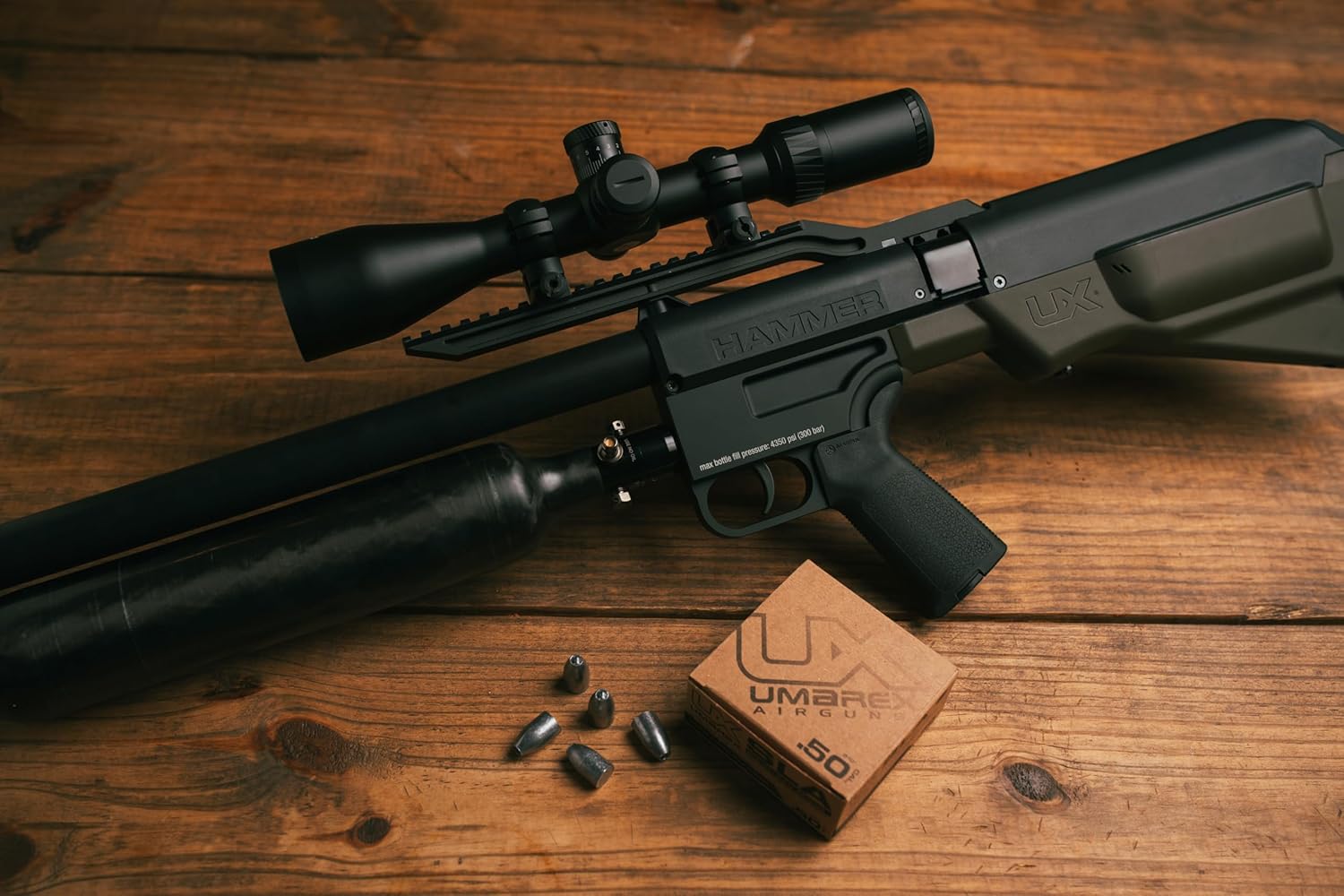
Okay, you’ve got a handle on caliber. Now, let’s talk about the machine that brings that cartridge to life, the action. This is the heart of the rifle, the part that loads, fires, and ejects the round. The choice here shapes the feel, the speed, and the very soul of your hunt. There’s no single right answer, only what’s right for your style.
Bolt-Action: Precision & Reliability
For most serious deer hunters, this is the default, and for good reason. The bolt-action is the workbench of rifles: simple, incredibly strong, and capable of superb accuracy. When you cycle that bolt, you’re connecting directly with the mechanism. It’s a deliberate, solid feeling that forces a pause, a moment of confirmation between shots.
Why it’s the gold standard: Its lockup is like a vault door. Multiple lugs seal the cartridge in a steel chamber, allowing it to safely handle very high pressures. This inherent strength and simplicity translate to accuracy. There’s less moving mass during the trigger pull, and the barrel is usually free-floated, meaning nothing touches it to throw off your point of impact. It’s also arguably the safest action for field carry, with a positive, mechanical safety and an action you can open visually to confirm it’s unloaded from a distance.
In short, if your priority is a single, precise shot from a steady rest (a treestand, a bipod, a shooting rail), the bolt-action is your tool. It’s the choice of guides, professional cullers, and hunters who believe the first shot is the only one that should count.
Lever-Action: Tradition & Fast Handling
The ker-chink of a lever being worked is the sound of American hunting history. Lever-actions are alive, fast, and utterly at home in the thick stuff. They’re often shorter, point more naturally like a shotgun, and allow for a remarkably fast follow-up shot without ever leaving your shoulder pocket.
Its modern niche: While tied to classics like the .30-30, the lever-action has evolved. Modern designs from companies like Henry and Browning chamber rounds like the .223, .308, and even the 6.5 Creedmoor, using box magazines that allow for pointed, aerodynamic bullets. This bridges the gap between tradition and modern ballistic performance.
Choose a lever if you hunt where snap shots at moving deer in cover are a real possibility, or if the tactile, hands-on tradition of the woods means as much to you as the harvest itself. It’s a rifle that feels active and connected in your hands.
Modern Sporting Rifle (AR Platform): Customization & Fast Follow-Up
The AR-15 platform has moved far beyond the headlines to become a legitimate, and in some areas dominant, hunting tool. Its greatest strength is modularity. You can build or configure one to fit you perfectly, from the length of pull to the trigger weight to the caliber.
For the deer woods: We’re not talking about the standard .223/5.56 here (which, with the right bullet, can be marginally adequate, but I strongly advise a more capable cartridge for deer). We’re talking about the AR in dedicated whitetail calibers like .300 Blackout (a superb, low-recoil brush round out to 150 yards), 6.5 Grendel (a long-range sleeper with 6.5 Creedmoor-like ballistics), .350 Legend, or the powerful .450 Bushmaster.
The advantages are real: minimal recoil due to the inline stock design and buffer system, lightning-fast follow-up shots, and unparalleled customization. The ergonomics, safety, magazine release, charging handle, are also identical every time, building rock-solid muscle memory.
Choose this platform if you appreciate modern ergonomics, might want to use the same familiar platform for varmints, home defense, and deer, or hunt in areas where a fast second or third shot at a group of animals (like hogs or moving deer) is a consideration.
Building Your System: Scope, Sling, and Ammo Selection
A rifle without a good scope is like a sports car with bald tires. And the wrong ammo will let you down every time. Let’s talk about building the complete, reliable system.
Choosing the Right Scope for Whitetail
Forget the super-high-magnification tactical scopes. For 99% of whitetail hunting, you want clarity, light gathering, and a simple, fast reticle.
- Magnification: A 3-9x40mm is the classic whitetail scope for a reason. On 3x, you have a wide field of view for close, quick shots in timber. On 9x, you have plenty of magnification to pick a spot on a deer’s chest at 300 yards. In recent years, scopes with a bottom end of 2x or 2.5x (like a 2.5-10x) have become popular for even better close-quarters field of view.
- The “First Light & Last Light” Factor: The objective lens (the 40 in 3-9x40) and the quality of the glass coatings determine how much light gets to your eye. This is what lets you see clearly in the dim, legal shooting minutes of dawn and dusk. Don’t skimp here. A brighter scope buys you more hunting time.
- Durability & Simplicity: It must hold zero after being bumped in a truck or hauled up a treestand. A simple duplex reticle, a thick post that thins to a fine crosshair, is perfect. It’s uncluttered, fast to use, and easy to understand in low light. Fancy bullet-drop compensation reticles are great for long-range, but for most deer shots, they’re unnecessary complication.
My rule, repeated because it’s that important: Your scope budget should match your rifle budget. A $300 scope on an $800 rifle is a good match. Putting a $100 scope on that same rifle is a guarantee of frustration.
Practice Ammo vs. Hunting Ammo
This is a critical distinction many hunters miss. You must zero your rifle and practice with the exact same ammunition you intend to hunt with.
Bullets of the same weight but different designs (a cheap full metal jacket vs. a premium expanding bullet) can have drastically different points of impact. Switching from a 150-grain practice round to a 150-grain Nosler Partition for the hunt could mean a miss by several inches at 100 yards.
The solution: Find a high-quality, premium expanding bullet designed for controlled penetration and reliable expansion on deer (think Nosler Partition, Hornady Interlock, Federal Fusion, Barnes TSX). Buy several boxes of the exact same make, weight, and lot number if possible. Use one box to zero your rifle and confirm your zero. Use another for practice. Save the last box for hunting season. This eliminates a major variable.
Essential Support Gear: Slings and Bipods
These aren’t just accessories; they’re force multipliers.
- A Good Sling: A quality, padded sling (like a Turner or Montana) isn’t just for carrying. It’s a shooting aid. Using a “hasty sling” wrap around your support arm steadies your offhand shots significantly. In a treestand, having a sling lets you safely hang the rifle on a hook and free your hands.
- Bipods & Shooting Sticks: If you hunt from the ground in open country, a bipod or a set of lightweight shooting sticks is a game-changer. They provide a rock-steady, repeatable rest that takes your own wobble out of the equation. The difference in confidence, and accuracy, when you’re solidly braced is immense.
Final Recommendations: Matching Hunter to Rifle
Alright, let’s boil this ocean of information down to something you can use. Forget the endless debates. Here’s my direct, experience-driven advice based on the most common hunter profiles I’ve seen. This is where we match the person to the purpose.
“I’m a New Hunter / Recoil-Sensitive”
Your number one job is to build confidence and skill, not endure punishment.
- Caliber: 6.5 Creedmoor or .243 Winchester. The 6.5 Creedmoor is the ultimate confidence-builder. Its mild recoil lets you focus on fundamentals, breath control, trigger squeeze, follow-through, without developing a flinch. The .243 is a classic and gentle teacher.
- Rifle: A mid-weight bolt-action with a quality recoil pad. Brands like Tikka, Bergara, or Howa offer fantastic out-of-the-box accuracy without a custom price tag.
- The Why: You will shoot more, practice more, and enjoy the process more. A pleasant shooting experience leads to faster skill development and, ultimately, more ethical hunts. This isn’t taking the easy way out; it’s the smart way in.
“I Hunt Thick Timber and Brush”
Speed, handling, and decisive power at short range are your trinity.
- Caliber: .30-30 Winchester or .350 Legend. These are short-range specialists. The .30-30 is timeless; the .350 Legend is its modern, straight-walled cousin for regulated states. Both deliver authoritative thump where you need it.
- Rifle: A lever-action (for the .30-30) or a compact bolt-action. You want a short overall length, a quick-to-the-shoulder balance, and maybe even a receiver-mounted peep sight or a low-power, wide-field scope (1-4x or 2-7x).
- The Why: When a buck is moving at 60 yards in the oak brush, you don’t have time for a precision setup. You need a quick, instinctual point. These rifles are made for that environment. They’re part of the forest.
“I Need One Rifle for Deer and Possibly Larger Game”
You’re looking for versatility and undeniable power.
- Caliber: .308 Winchester or .30-06 Springfield. These are the kings of “do-it-all.” For deer, a 150-165 grain bullet is perfect. If you draw an elk or bear tag, switch to a heavy, tough 180-200 grain bullet. The ammunition is everywhere, in every conceivable type.
- Rifle: A dependable, all-weather bolt-action. Think along the lines of a Browning X-Bolt, Winchester Model 70, or a Ruger American GoWild. You want a rifle built to handle the elements and the slightly stiffer recoil of these potent rounds.
- The Why: This is the “no excuses” choice. With the right bullet, these cartridges will humanely take any big game animal in North America. They are the definition of proven, and they give you the freedom to chase any opportunity without wondering if your gear is up to the task.
“I Prize Long-Range Accuracy and Shot Placement”
You view hunting as a discipline of precision. Environment control is your craft.
- Caliber: 6.5 Creedmoor or .270 Winchester. The 6.5 for its laser-like trajectory and wind-bucking ability; the .270 for its blazing speed and flat arc.
- Rifle: A heavier, target-contoured bolt-action from the start. You’re looking at brands like Bergara B-14 HMR, Tikka T3x CTR, or the Howa 1500 Heavy Barrel. These are designed for stability and repeatability.
- System: This is where the system truly matters. Pair this with a first-focal-plane scope with a useful reticle (like a Mil-Dot or Christmas tree style), a sturdy bipod, and a rear bag. Your investment is in a cohesive precision tool, not just a hunting rifle.
- The Why: For you, the challenge is the precise execution. This setup minimizes variables, drop, wind, human wobble, and maximizes your ability to make an ethical, one-shot harvest at extended ranges. It’s about owning the entire ballistics conversation.
FAQ: Your Whitetail Rifle Questions, Answered
Let’s hit those last few, nagging questions that keep hunters up at night. These are the ones I hear constantly at seminars and in camp.
What is the absolute best caliber for whitetail deer?
You knew I’d say it: there isn’t one. But if you held my boots to the campfire and forced me to pick one that would cause the fewest problems for the most people, in the most places, I’d point to the 6.5 Creedmoor. It’s mild, accurate, effective, and widely available. It’s the closest thing to a universal “easy button” we have right now for dedicated deer hunting. The .308 Winchester is a very, very close second for its sheer power and ubiquity.
Is a .223/5.56 ethical for whitetail deer?
This is a minefield, but I’ll give you the straight talk most won’t. For the vast majority of hunters, no, it is not the right choice. It can be done ethically under very specific conditions: with heavy, controlled-expansion bullets (like 62+ grain bonded soft points), at short ranges (inside 150 yards), with flawless shot placement behind the shoulder. It leaves zero margin for error. Why handicap yourself? A cartridge like the 6.5 Creedmoor or 7mm-08 gives you that margin for a slightly angling shot, a longer reach, and more decisive energy. Choosing a more capable cartridge is an act of respect for the animal.
How much should I spend on a scope vs. the rifle?
We’re going to cement this. Plan for a 1:1 ratio. If you spend $800 on a rifle, plan to spend $800 on your scope and quality ring mounts. Your scope is your aiming brain. A cheap scope will have poor glass (fuzzy in low light), unreliable adjustments (so it won’t hold zero), and it will likely fog or fail. A high-quality scope from brands like Leupold, Vortex (their Viper/PST line or above), Nightforce, or Zeiss turns a good rifle into a trustworthy system.
What’s more important: the rifle or the ammunition?
The rifle is the launch platform, but the ammunition is the projectile. You need both to be good, but if I had to prioritize, I’d lean toward ammunition consistency. A medium-grade, modern factory rifle from a reputable brand is almost always more accurate than 95% of hunters can shoot. But even the finest custom rifle will shoot poorly with inconsistent, low-quality ammo. Invest in finding a specific premium hunting load that your particular rifle “likes” (groups tightly with), and then stick with it.
Conclusion: Confidence in Your Choice
Look, at the end of the day, the “best” rifle is the one that feels like an extension of you when that moment comes. It’s the one you’ve practiced with so much that operating it is muscle memory. It’s the one you trust to do its part, so you can focus on doing yours: judging the animal, reading the wind, steadying your breath, and making that single, responsible shot.
Don’t get paralyzed by the search for perfection. Use this guide to narrow your focus based on who you are and where you hunt. Handle rifles in a store. Feel the balance. Then, make a choice, invest in good glass, buy a case of one specific premium ammunition, and go to the range. Put rounds downrange. Learn your holds. Become competent.
The whitetail woods are filled with tradition, but they respect performance above all. Be a student of your craft, and choose the tool that makes you a more responsible hunter. That’s the only “best” that really matters.
Now get out there, get zeroed, and good hunting this fall.
