

I’ve watched too many hunters agonize over caliber selection like they’re choosing a life partner. Here’s the truth: picking a good deer hunting caliber isn’t nearly as complicated as the internet makes it seem. The best caliber for deer is one that delivers adequate energy at your typical shooting distance, that you can shoot accurately without flinching, and that won’t leave you searching three counties for ammunition. Everything else is just noise.
After thirty years of deer hunting across twelve states and testing more rifles than my wife thinks is reasonable, I can tell you this with absolute certainty: shot placement beats caliber selection every single time. But that doesn’t mean caliber choice is irrelevant. The right cartridge gives you confidence, and confidence leads to calmer nerves and better shooting when that buck finally steps into the opening.
What Makes a Good Deer Hunting Caliber? Key Criteria Explained
Let’s cut through the campfire debates and focus on what actually matters when you’re trying to humanely harvest a deer.
Effective Energy and Bullet Performance at Hunting Ranges
The old rule of thumb suggests 1,000 foot-pounds of energy at impact for whitetail deer. That’s a decent starting point, though I’ve seen well-placed 140-grain 6.5 Creedmoor bullets at 800 foot-pounds drop deer like lightning. Energy matters, but it’s not everything.
What really counts is how that bullet performs when it hits. A fragmenting varmint bullet with 2,000 foot-pounds will make a mess without penetrating vitals. A bonded hunting bullet with 1,200 foot-pounds will punch through shoulder blade and destroy both lungs. Bullet construction matters as much as the numbers on the box.
For most deer hunting scenarios, you want a cartridge that maintains 1,000 to 1,500 foot-pounds at your expected shot distance. If you’re hunting eastern hardwoods where 100 yards is a long shot, nearly any centerfire rifle cartridge works. Hunting mule deer in Wyoming where 300-yard shots are common? You need something with better downrange performance.
Recoil Management and Shooter Confidence
I learned this lesson watching my nephew develop a terrible flinch from shooting his dad’s .300 Win Mag. The kid could barely hit a pie plate at 100 yards because he was anticipating the kick before he even touched the trigger. We switched him to a 7mm-08, and suddenly he was drilling one-inch groups.
Recoil doesn’t just affect your accuracy on the range. It affects your shooting in the field when adrenaline is already making your hands shake. If you’re flinching or compensating for anticipated recoil, you’re going to miss or make bad hits. A deer hit poorly with a magnum is worse than a deer hit perfectly with a .243.
For most adult shooters, anything generating under 20 foot-pounds of recoil is comfortable enough for good shooting. The .308 Winchester sits around 17 foot-pounds. The .30-06 pushes closer to 20. The 6.5 Creedmoor comes in around 13. These numbers matter because comfortable shooting leads to practice, and practice makes you deadly.
Ammunition Availability and Cost Considerations
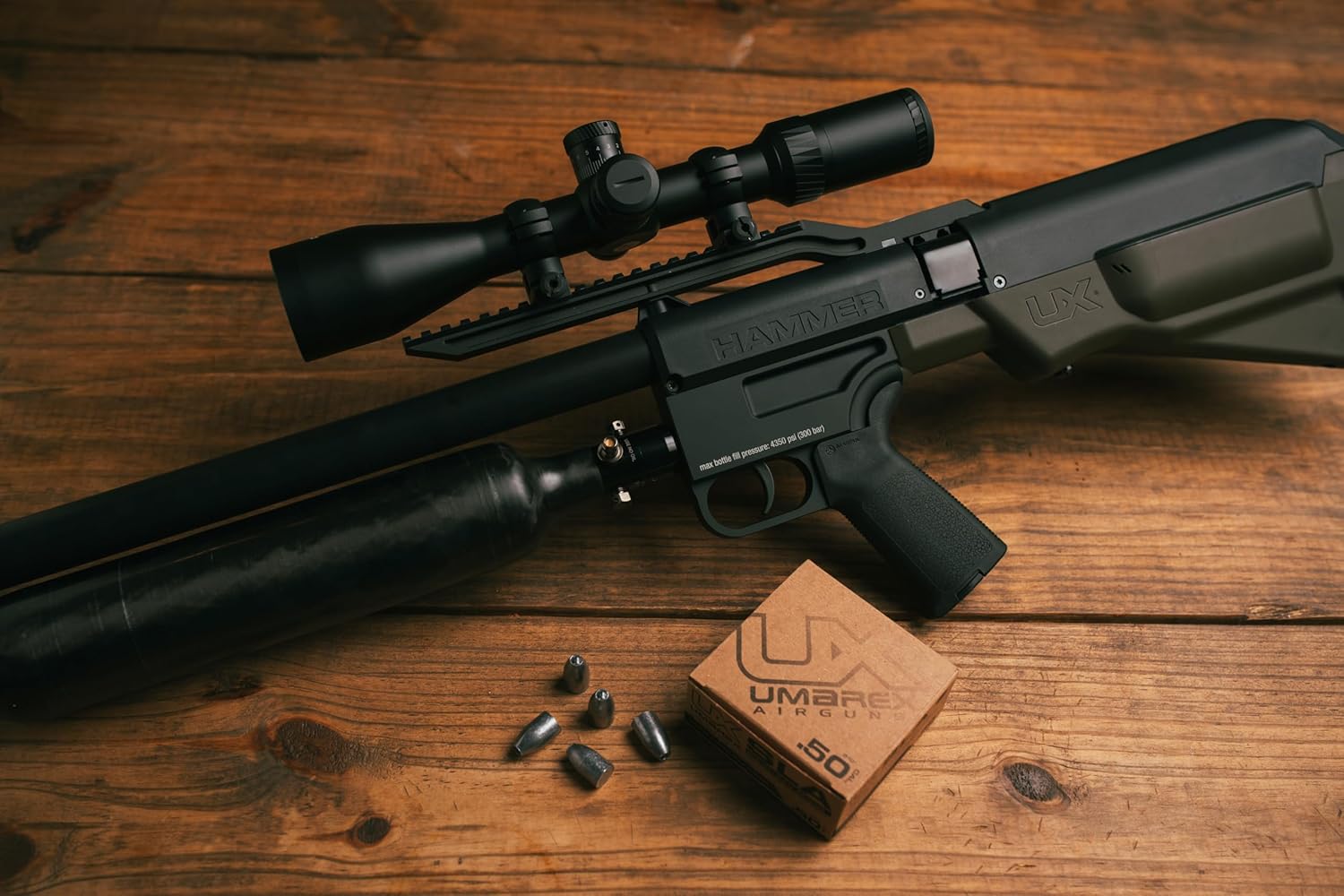
You can own the perfect deer caliber on paper, but if you can’t find ammunition or afford to practice, it’s useless. I watched hunters during the 2020 shortage scrambling to find anything that would chamber in their rifles. The guys shooting .308, .30-06, and .270 had options. The guys shooting 6.8 Western and .300 PRC? They were out of luck.
Common calibers mean you can walk into nearly any sporting goods store and find multiple bullet weights and brands. You can practice affordably. You can find premium hunting loads when it matters. This isn’t sexy advice, but it’s practical advice that keeps you hunting instead of sitting home because you couldn’t find ammunition.
Budget matters too. If you’re spending $60 per box of premium magnum ammunition, you’re probably not shooting enough to stay sharp. A hunter who shoots 100 rounds of .308 before season will outperform someone who shoots 20 rounds of .300 Win Mag because ammunition cost kept them off the range.
Hunting Environment and Shot Distance
Where you hunt should heavily influence what you shoot. My Wisconsin deer rifle is a lever action .30-30 because most of my shots come inside 75 yards in thick cover. My Montana rifle is a .270 Winchester because I’m regularly shooting across open sage flats at 250 yards.
Eastern and southern hunters dealing with thick woods, shooting lanes through pines, or agricultural edges rarely need the flat trajectory of magnums. A .30-30, .350 Legend, or .308 handles everything these environments demand. The deer aren’t any tougher in dense cover, and the extra velocity of a magnum means nothing when your longest shot is 100 yards.
Western hunters chasing mule deer in open country or hunting big northern whitetails in prairie agriculture face different challenges. When you’re shooting 300 yards, bullet drop and wind drift become real problems. This is where the flatter shooting calibers like .270 Winchester, 6.5 PRC, and .280 Ackley Improved earn their reputation.
The Top Deer Hunting Calibers Ranked by Real-World Performance
I’m ranking these based on a combination of effectiveness, availability, cost, recoil, and versatility. Your mileage may vary, and that’s fine.
.308 Winchester: The All-Around Champion
If I could own only one deer rifle for the rest of my life, it would chamber .308 Winchester. This cartridge does everything well without doing anything spectacularly. It’s the Toyota Camry of deer calibers, and I mean that as the highest compliment.
The .308 pushes a 150-grain bullet around 2,800 feet per second and a 165-grain around 2,700 fps. That’s enough velocity for flat shooting out to 300 yards while maintaining excellent energy on target. Recoil is mild enough that most shooters can handle it comfortably, even in lighter rifles.
Ammunition availability is unmatched. You can find .308 in gas stations in remote Alaska and convenience stores in rural Alabama. During shortages, it’s one of the last calibers to disappear. It’s also affordable, with quality hunting ammunition running $25 to $40 per box and practice ammunition often available under $20.
For deer hunting specifically, the 150-grain and 165-grain bullets are ideal. The 150s give you a bit more velocity for longer shots, while the 165s offer slightly better penetration on large-bodied deer or quartering shots. Both work exceptionally well with modern bonded or polymer-tipped bullets.
The .308 works everywhere. I’ve used it on whitetails in Georgia thickets and mule deer in Colorado mountains. It handles 50-yard shots and 350-yard shots with equal confidence. If you’re a new hunter trying to decide on your first deer rifle, stop overthinking it and buy a .308.
.30-06 Springfield: The Proven Classic
The .30-06 is the .308’s older brother with a bit more punch and a century of proven performance. It’s been dropping deer since 1906, and it’ll be dropping deer long after we’re gone.
The advantage of the .30-06 over the .308 comes from its larger case capacity. You can push a 150-grain bullet to 2,900 fps and a 180-grain to 2,700 fps. That extra 100 to 150 fps translates to flatter trajectory and better energy retention at extended ranges. For most hunting scenarios, the difference is minimal. At 300 yards, you’re talking about an extra inch or two of retained energy.
Where the .30-06 shines is versatility. It handles bullet weights from 125 grains up to 220 grains, though for deer you’ll want to stick with 150 to 180 grains. The 150s and 165s work perfectly for average whitetails and mule deer. If you’re hunting massive northern whitetails or want one rifle for both deer and elk, the 180-grain loads give you that capability.
Recoil is noticeably sharper than the .308, sitting around 20 to 22 foot-pounds depending on rifle weight and load. It’s not punishing, but smaller or recoil-sensitive shooters might prefer the .308. Ammunition availability matches the .308, and prices are nearly identical.
Honestly, choosing between .308 and .30-06 for deer hunting is splitting hairs. Both will kill any deer in North America cleanly. The .30-06 gives you slightly more range and versatility. The .308 gives you slightly less recoil and often comes in shorter, handier rifles. Pick whichever you shoot better.
6.5 Creedmoor: The Modern Precision Choice
The 6.5 Creedmoor has become almost comically popular over the past decade, and the hype is mostly justified. It’s not a magic cartridge, but it does certain things exceptionally well.
The Creedmoor launches a 140-grain bullet around 2,700 fps with remarkably low recoil, usually around 13 to 15 foot-pounds. That high ballistic coefficient 6.5mm bullet retains velocity and energy downrange better than anything in the .30 caliber family. At 400 yards, a 140-grain Creedmoor bullet often carries more energy than a 150-grain .308.
For deer hunting, the 6.5 Creedmoor is devastating. Those 130 to 143-grain hunting bullets penetrate deeply and create significant wound channels. The light recoil means you can spot your own shots through the scope, watch the deer’s reaction, and make quick follow-up shots if necessary.
The biggest advantage is how easy this caliber is to shoot accurately. New hunters and experienced shooters alike find they can consistently hit targets at distances that would challenge them with harder-recoiling calibers. When you’re hunting and your heart is pounding, that matters enormously.
Downsides? It’s a bit light for large-bodied mule deer bucks or tough quartering angles on big northern whitetails. It works, but you need good bullet selection and precise shot placement. It’s also not ideal for true long-range hunting beyond 500 yards, despite what the internet claims. And while ammunition is now widely available, it’s not quite as ubiquitous as .308 or .30-06.
.270 Winchester: The Flat-Shooting Favorite
Jack O’Connor spent decades promoting the .270 Winchester, and he wasn’t wrong. This cartridge has accounted for more deer, elk, and sheep than most modern magnums combined.
The .270 pushes a 130-grain bullet to 3,000 fps and a 150-grain to about 2,850 fps. That velocity creates an extremely flat trajectory. At 300 yards, a .270 with a 200-yard zero drops only about 7 inches. Compare that to 9 inches for a .308. When you’re trying to judge distance on a mule deer across a canyon, that matters.
For deer hunting, the 130-grain and 140-grain bullets are ideal. They expand reliably, penetrate adequately, and deliver shocking terminal performance. The .270 hits deer hard, and they typically don’t go far.
Recoil sits between the .308 and .30-06, around 17 to 19 foot-pounds. Most shooters handle it fine, though it’s noticeably sharper than a 6.5 Creedmoor. Ammunition is everywhere, and prices are reasonable.
The .270 excels in open country. If you hunt western mule deer, antelope, or whitetails in agricultural areas where long shots are common, this caliber makes those shots easier. For thick eastern woods where shots are close, you’re not gaining anything over a .308 or .30-30.
.243 Winchester: Best for Youth and Recoil-Sensitive Hunters
The .243 Winchester gets dismissed by macho hunters who think you need magnums for everything. Those guys are idiots. A .243 with good bullets and good shot placement kills deer just fine.
This cartridge pushes a 100-grain bullet around 2,900 fps with only about 10 foot-pounds of recoil. That gentle recoil makes it perfect for youth hunters, smaller-framed shooters, or anyone who wants to focus on accuracy instead of managing flinch.
For deer, you want 95 to 100-grain bullets designed for big game, not varmint bullets. Modern bonded bullets like the Federal Fusion or Hornady InterBond in .243 penetrate deeply and create adequate wound channels. Shot placement becomes critical, though. You can’t punch through heavy shoulder bone like you can with a .30 caliber. Aim for the crease behind the shoulder, and the deer will die quickly.
The .243’s limitation is range and margin for error. Keep shots inside 250 yards, and make sure you’re hitting vitals. It’s not a caliber for quartering shots at 300 yards on large mule deer bucks. But for average whitetails at reasonable distances? Deadly.
7mm-08 Remington: The Balanced Performer
The 7mm-08 doesn’t get the attention it deserves. It sits perfectly between the .243 and .308, offering a sweet balance of power and shootability.
A 140-grain bullet leaves the barrel around 2,850 fps, delivering better ballistics than the .308 with less recoil. At 300 yards, it hits with more energy than a .243 while recoiling less than a .30-06. For deer hunting, it’s nearly perfect.
The 7mm-08 handles 120 to 150-grain bullets, though the 139 to 140-grain options are ideal for deer. These bullets penetrate excellently, expand reliably, and drop deer cleanly. Recoil runs about 14 to 16 foot-pounds, making it comfortable for most shooters.
The downside is ammunition availability. You’ll find 7mm-08 in most sporting goods stores, but selection is limited compared to more popular calibers. Prices are reasonable, though not quite as cheap as .308 or .30-06.
If you want something better than .243 but more pleasant to shoot than .308, the 7mm-08 is your answer. It’s also an excellent choice for hunters who might eventually want to pursue elk without buying a second rifle.
.30-30 Winchester: The Brush Gun Legend
The .30-30 lever action has probably killed more deer than any other rifle and caliber combination in North America. It’s been doing it since 1895, and it still works today.
This cartridge pushes a 150-grain bullet around 2,400 fps and a 170-grain around 2,200 fps. Those aren’t impressive numbers, but they don’t need to be. The .30-30 is designed for woods hunting where shots come fast at close range.
Inside 150 yards, the .30-30 hits deer hard and puts them down. The moderate velocity actually works to your advantage in dense cover, creating less meat damage than higher velocity cartridges. The lever action platform is fast for follow-up shots, light to carry through thick cover, and practically indestructible.
The limitation is obvious: this is not a long-range caliber. At 200 yards, the bullet has dropped nearly 10 inches and is running out of steam. For open country hunting, choose something else. For eastern hardwoods, southern pine forests, or anywhere deer are shot at conversational distances, the .30-30 remains brilliantly effective.
Matching Caliber to Your Hunting Reality
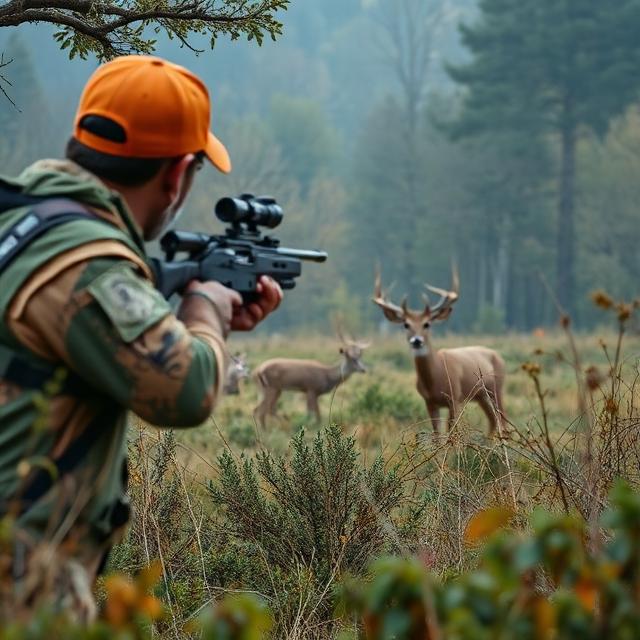
The “best” deer hunting caliber depends entirely on where and how you hunt. A Montana mule deer hunter and a Georgia whitetail hunter have completely different needs.
For whitetail hunting in the eastern United States, where typical shots range from 50 to 150 yards, nearly any centerfire rifle caliber works perfectly. The .30-30, .350 Legend, .243, .308, and 7mm-08 all handle these conditions effortlessly. Choosing based on recoil preference and rifle handling characteristics makes more sense than chasing ballistic performance you’ll never use.
Mule deer in western open country demand more attention to trajectory and energy retention. The .270 Winchester, 6.5 Creedmoor, 7mm-08, and .308 all work well out to 300 yards. If you regularly shoot beyond that distance, consider the 6.5 PRC or .280 Ackley Improved for flatter trajectories and better wind performance.
The real secret is matching your caliber to your actual hunting conditions, not your imagined hunting conditions. Most hunters vastly overestimate the distances they’ll shoot. According to multiple studies, the average shot distance on whitetail deer is under 100 yards. Buying a magnum for 400-yard shots you’ll never take is solving a problem you don’t have.
Why Bullet Selection Matters as Much as Caliber
I’ve seen more arguments about caliber choice than presidential elections, but bullet selection rarely gets the attention it deserves. The wrong bullet in the right caliber performs worse than the right bullet in an adequate caliber.
Modern bonded bullets like the Federal Fusion, Nosler AccuBond, and Swift Scirocco penetrate deeply while expanding reliably. Polymer-tipped bullets like the Hornady ELD-X and Nosler Ballistic Tip offer excellent accuracy and devastating terminal performance. These premium bullets cost more, but they’re worth every penny when you’ve got a shot at the buck of a lifetime.
Bullet weight matters too. For average whitetails under 200 pounds, lighter bullets in the 130 to 150-grain range work beautifully, offering flatter trajectories and explosive expansion. For large-bodied mule deer or northern whitetails pushing 250 to 300 pounds, heavier bullets in the 165 to 180-grain range penetrate better and handle tough angles.
The cheap soft point ammunition you use for practice isn’t the ammunition you want for hunting. Save the budget stuff for zeroing and range work. When hunting season arrives, invest in premium bullets that expand and penetrate reliably.
Common Caliber Selection Mistakes That Cost Hunters
The biggest mistake I see is buying too much gun. Guys convince themselves they need a .300 Win Mag for whitetails, then develop a flinch from the recoil and start missing deer. That magnum might deliver 3,500 foot-pounds at the muzzle, but it doesn’t matter if you can’t hit what you’re aiming at.
Excessive recoil destroys shooting confidence. I’ve guided hunters who shoot magnums terribly but could drill three-inch groups all day with a .308. Your goal isn’t impressing people at the range. It’s cleanly harvesting deer. Use enough gun, but not so much gun that you can’t shoot it accurately.
The second mistake is obsessing over caliber while ignoring shot placement. A .243 through both lungs kills faster than a .300 Win Mag through the guts. Every single time. The hunting forums are filled with debates about foot-pounds and ballistic coefficients, but none of that matters if you don’t know where to aim and can’t hit that spot consistently.
The third mistake is buying an obscure caliber because it’s new or trendy. The 6.8 Western might be ballistically superior to the .270 Winchester, but when you’re in rural Montana and need ammunition, you’ll find .270 in every store. Practical considerations matter more than ballistic charts.
Final Recommendations: Choose Confidence Over Complexity
After everything I’ve told you, here’s what actually matters: pick a caliber you shoot well, practice with it regularly, learn its trajectory, and place your shots carefully. That approach will kill more deer than chasing perfect ballistics or buying the latest trendy cartridge.
If you’re a new hunter or buying your first deer rifle, get a .308 Winchester. It’s affordable, available, effective, and you’ll never outgrow it. If recoil concerns you or you’re buying for a youth hunter, choose the 6.5 Creedmoor or 7mm-08. If you hunt open country where long shots are common, the .270 Winchester gives you flatter trajectory without punishing recoil.
For experienced hunters looking to add another rifle, buy something different from what you already own. If you’ve got a .30-06, try a 6.5 Creedmoor. If you shoot a .308, explore the .270 Winchester. Expanding your experience with different calibers makes you a more versatile and knowledgeable hunter.
The truth is that deer aren’t hard to kill. They’re not armored, they’re not particularly tough, and they don’t require magnum power. They require a bullet in the right place. Focus on shooting accurately, understanding your rifle’s trajectory, and making ethical shots within your capability. Do that, and any caliber on this list will fill your freezer with venison.
Now stop reading articles about calibers and go practice shooting.
Deer Hunting Caliber Quick Reference Guide
| Caliber | Typical Bullet Weight | Muzzle Velocity | Recoil (ft-lbs) | Effective Range | Best For | Ammunition Availability |
|---|---|---|---|---|---|---|
| .243 Winchester | 95-100 gr | 2,900-3,000 fps | 10-11 | 250 yards | Youth, recoil-sensitive, average whitetails | Excellent |
| 6.5 Creedmoor | 130-143 gr | 2,700-2,800 fps | 13-15 | 400 yards | All deer, long range, low recoil | Excellent |
| 7mm-08 Remington | 139-140 gr | 2,850 fps | 14-16 | 350 yards | All deer, balanced performance | Good |
| .308 Winchester | 150-165 gr | 2,700-2,800 fps | 17-18 | 350 yards | All deer, all conditions, beginners | Excellent |
| .270 Winchester | 130-140 gr | 2,900-3,000 fps | 17-19 | 400 yards | Open country, mule deer, long range | Excellent |
| .30-30 Winchester | 150-170 gr | 2,200-2,400 fps | 11-12 | 150 yards | Woods hunting, brush, close range | Excellent |
| .30-06 Springfield | 150-180 gr | 2,700-2,900 fps | 20-22 | 400 yards | All deer, elk capability, versatile | Excellent |
| 6.5 PRC | 143-147 gr | 2,950-3,000 fps | 16-18 | 500 yards | Long range, large mule deer, western hunting | Good |
| .300 Win Mag | 165-180 gr | 3,000-3,100 fps | 25-30 | 500+ yards | Large game, elk and deer combo | Excellent |
| .350 Legend | 150-180 gr | 2,200-2,300 fps | 9-11 | 200 yards | Straight-wall zones, low recoil | Good |
Reference data compiled from manufacturer specifications and field testing. Individual loads may vary.
