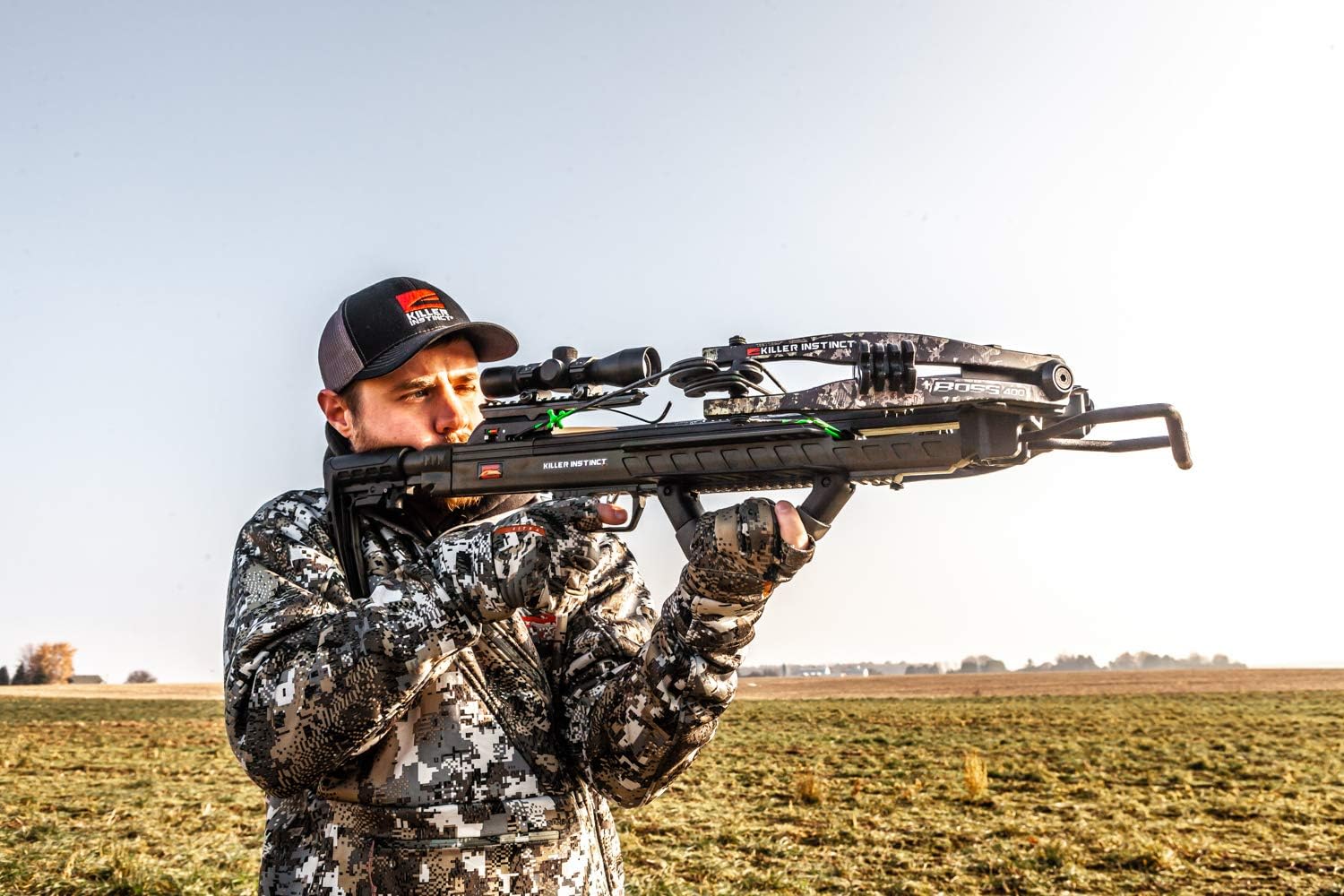
I’ve spent the last twenty years chasing whitetails, and I’ve seen the crossbow world go from “clunky and loud” to “surgical and silent.” If you’re looking for the short answer to what the best crossbow for deer hunting is right now, it’s the TenPoint Turbo X. It hits that perfect middle ground where high-end speed meets a safety system that actually makes sense in the woods. But honestly, the “best” bow depends entirely on whether you’re hiking three miles into public land or sitting in a comfortable box blind over a food plot.
The New Standard for the Modern Woodsman
When I first started, a crossbow was basically a vertical bow turned sideways with a crude trigger. Today, they are precision instruments. The gear has evolved so fast that even seasoned hunters feel a bit of “tech-shock” when looking at the latest flagship models. My goal here isn’t to just list specs you can find on a box. I want to help you find the tool that feels like an extension of your arm when that buck you’ve been tracking all summer finally turns broadside at thirty yards.
Finding a great bow is about confidence. You need to know that when you pull that trigger, the bolt is going exactly where the reticle was resting, and the mechanical components aren’t going to fail you in the cold. Let’s look at the heavy hitters that are actually worth your hard-earned paycheck this season.
Deep Dive: The Best Crossbows for Deer Hunting Reviewed
1. TenPoint Turbo X – The Gold Standard
If I had to pick one bow to hunt with for the rest of my life, this would likely be it. TenPoint has a reputation for being the “over-engineered” brand, and the Turbo X proves why that’s a good thing.
The standout feature here is the ACUslide MAXX system. If you’ve ever felt the nerves of trying to de-cock a high-poundage crossbow with a manual rope, you’ll appreciate this. It’s a silent, controlled crank that lets you back the tension off at any point without the handle spinning out of control. In the deer woods, silence is everything. Being able to pack up at the end of a hunt without a loud “thwack” or a clicking ratchet is a massive tactical advantage.
It’s fast enough to keep your trajectory flat, but not so fast that it becomes finicky with arrow choice. It’s the “Old Reliable” of the high-end world.
2. Ravin R470 – Raw Power and Speed
If you’re the type of hunter who wants the absolute cutting edge, the Ravin R470 is hard to beat. It looks more like something out of a sci-fi movie than a traditional bow. Because of their HexCoil system, the limbs are incredibly narrow. When cocked, this thing is only about five inches wide.
Why does that matter? Think about a thick cedar swamp or a cramped ground blind. Trying to maneuver a wide, traditional crossbow in those spots is a recipe for hitting your limbs on a branch. The R470 avoids that entirely.
It shoots at a blistering 470 feet per second. While speed isn’t everything, it does give you a much larger margin for error if you misjudge a distance by five yards. Just be prepared to pay for that performance; it’s an investment piece for the serious enthusiast.
3. Barnett Hyper Raptor BCX – The Smart Value Play
Barnett used to be seen as the “entry-level” brand, but they’ve stepped up their game significantly in the last three years. The Hyper Raptor is proof. What I love about this bow is that it’s designed specifically for micro-diameter arrows.
These thinner bolts (the HyperFlite series) have incredible penetration. Wind doesn’t catch them as easily, and they track through the air with less drag. For a hunter on a budget who still wants “pro-level” performance, this is the one. It’s light, it’s punchy, and it doesn’t feel like a toy. It’s a workhorse designed for the guy who puts meat in the freezer every single year.
The “Hunter’s Choice” Comparison Framework
To make this easier to digest, I’ve put together a quick-reference guide. This isn’t just about speed; it’s about how these bows actually handle when you’re out in the elements.
| Crossbow Model | Best For… | Crucial Spec (FPS) | Weight | The “Real World” Edge |
| TenPoint Turbo X | Overall Versatility | 440 FPS | 7.0 lbs | The safest, most silent cocking system on the market. |
| Ravin R470 | Tight Spaces | 470 FPS | 6.9 lbs | Only 5.75 inches wide when cocked. Perfect for blinds. |
| Barnett Hyper Raptor | Accuracy/Value | 410 FPS | 7.1 lbs | Optimized for micro-diameter bolts for deeper penetration. |
| Excalibur Hybrid-X | Rugged Durability | 380 FPS | 7.5 lbs | No cams to timing issues. It’s virtually indestructible. |
| Wicked Ridge M1 | Weight/Portability | 390 FPS | 5.8 lbs | The lightest bow in its class. Great for long hikes. |
How to Choose the Best Crossbow for Your Hunt
Before you swipe your card, you need to think about how you actually hunt. I’ve seen guys buy the fastest bow on the market, only to realize it’s too heavy to carry up a mountain. Or they buy a budget bow and realize the trigger feels like pulling a rusty lever.
Speed vs. Kinetic Energy
Everyone focuses on Feet Per Second (FPS). It’s the sexy number on the box. But for deer, kinetic energy (KE) is what actually does the work. You want a bow that can push a heavy enough bolt to pass completely through the vitals. Most modern bows over 350 FPS will do this easily, but if you’re hunting in high winds or taking longer shots, that extra speed helps keep your flight path “flat.”
Maneuverability and Weight
If you’re sitting in a ladder stand with a rail, weight doesn’t matter much. But if you’re a “run and gun” hunter who likes to stalk or move frequently, every ounce feels like a pound by noon. Look at the Wicked Ridge Invader M1 if weight is your priority. At under six pounds, it’s a dream to carry over your shoulder.
The Trigger Factor
This is often overlooked. A “mushy” trigger leads to pulled shots. You want something crisp, with a predictable break. The higher-end models from TenPoint and Ravin have triggers that feel more like a match-grade rifle than a bow. If you’re used to shooting rifles, you’ll find the transition to a high-quality crossbow trigger very natural.
Essential Crossbow Accessories for Deer Hunters
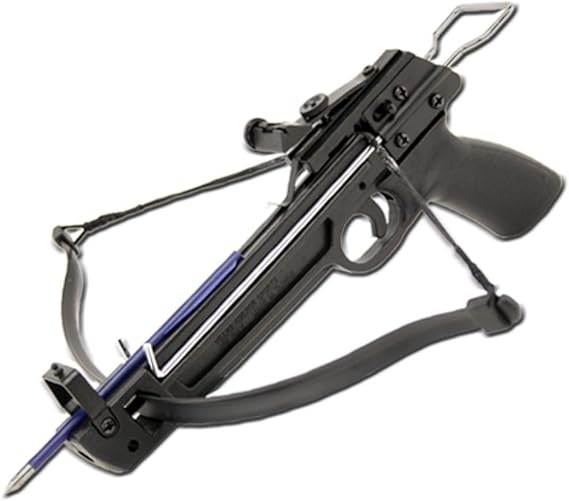
Buying the bow is just the first step. To actually get a deer into the truck, you need a supporting cast of gear. I’ve seen guys spend two grand on a flagship crossbow and then use the cheapest broadheads they could find at a gas station, don’t be that guy.
1. Optics: Seeing is Believing
Most high-end bows come with a decent “package” scope, but if you want to push your effective range, look at something like the Vortex Crossfire II or the Hawke XB30 Pro. These allow you to “match” the reticle to your specific bolt speed (FPS), so your 20, 30, and 40-yard dots are actually dead on.
If you have the budget, the Garmin Xero X1i or Burris Oracle X are game-changers. They have built-in rangefinders. You press a button, it ranges the deer, and a single illuminated dot appears exactly where you need to aim. No more fumbling with a handheld rangefinder while a buck is walking through a shooting lane.
2. Broadheads: The Business End
With modern crossbows pushing 400+ FPS, you can’t just use any broadhead. At those speeds, many mechanical heads will “pre-deploy” (open in flight) because of the sheer force, causing your bolt to plane off like a frisbee.
- Mechanicals: Look for heads with heavy-duty tension springs or collars, like the SEVR Ti 1.5 or Rage Hypo 2 XBOW. These stay closed until they hit ribs.
- Fixed Blades: If you prefer the “can’t fail” nature of a fixed blade, the QAD Exodus or Slick Trick XBOW are designed to be aerodynamic enough to handle high-velocity flight without catching the wind.
3. The Shift to Micro-Diameter Arrows
You’ll notice a lot of talk about “micro” bolts (like the Barnett HyperFlite or Victory VAP). Here is the “expert secret”: these thinner shafts have less surface area, which means they cut through crosswinds better and penetrate significantly deeper. It’s like the difference between pushing a nail and a tent stake through a piece of plywood. If you hunt in windy areas, these are worth the extra few dollars.
Crossbow Safety and Maintenance Tips
A crossbow is under a massive amount of tension. If you don’t take care of it, it won’t just miss the deer, it could actually be dangerous.
The “Golden Rule” of Rail Lube
Think of your crossbow rail like the engine in your truck. Without oil, things get hot and break. You should apply a thin film of rail lubricant every 10–15 shots. This reduces friction on the string serving, which is the most common part to fail.
String Waxing
Run your fingers along the “fuzzy” parts of your string. If it feels dry or looks frayed, it needs wax. A well-waxed string stays supple and fast. Just avoid getting wax in the trigger box or on the center serving where the bolt sits, as that can gunk up the internal mechanics.
The Pre-Flight Inspection Checklist
Before you climb into your stand, run this 30-second “Hunter’s Fact Sheet” to ensure your gear is field-ready:
The 5-Point Field Readiness Checklist
- Limbs: Run a cotton ball or a gloved hand along the limbs to check for tiny cracks or splinters.
- Fasteners: Use an Allen wrench to ensure your scope rings and stirrup bolts haven’t vibrated loose.
- Cocking Device: Check the pull cords for any fraying or thinning.
- Anti-Dry Fire (ADF): Visually confirm the ADF latch is clear of debris (leaves, twigs).
- Nock Alignment: Ensure your bolt is seated firmly against the string. A “gap” here is the #1 cause of broken limbs.
When you walk into a pro shop, it’s easy to get overwhelmed by the rows of camo limbs and the “tactical” marketing. The shop tech might try to sell you the bow they have the most of in stock, but you want the one that’s right for your hunt.
Think of this as your “pre-purchase interview.” Don’t be afraid to be the guy who asks too many questions, it’s your investment and your season on the line.
The “Pro-Shop” Interview: 5 Questions to Ask Before You Buy
1. “Can I feel the trigger break on a cocked bow?”
Most shops have a test range. Don’t just pull the trigger on an uncocked bow (which you should never do anyway). Ask them to cock it and let you fire a bolt into a bag. You’re looking for “creep”, that mushy feeling before the shot. A crisp, rifle-like trigger is the difference between a double-lung hit and a “how did I miss?” moment.
2. “What is the actual ‘real-world’ weight with the scope and quiver attached?”
The weight listed on the box is almost always the “bare bow” weight. Once you add a scope, a quiver full of bolts, and a cocking crank, a “6-pound” bow can quickly turn into a 9-pound anchor. Hold it with one hand by the grip to see if it’s front-heavy. If it wants to tip forward aggressively, it’ll be harder to shoot off-hand in the woods.
3. “Does this model have a history of limb or string issues?”
Shop techs see what comes back for repairs. Ask them point-blank: “Are you seeing a lot of these come back for warranty work?” Some high-speed bows are tuned so tight that they chew through strings every 100 shots. You want a bow that spends more time in the woods than in the repair shop.
4. “Is this de-cockable without firing a bolt?”
This is a huge safety and convenience factor. In the old days, you had to carry a “discharge target” in your truck or fire a bolt into the soft dirt at the end of every hunt. Ask if the bow has a controlled de-cocking system (like TenPoint’s ACUslide or Ravin’s Versa-Draw). It’s worth the extra money for the peace of mind alone.
5. “What’s the warranty turnaround time?”
If a limb delaminates in early November, you don’t want to hear that the manufacturer has a six-week backlog. Ask if the shop can do “in-house” repairs or if the bow has to be shipped back to the factory.
Making the Final Call
At the end of the day, the best crossbow for deer hunting is the one that you feel confident handling when your heart is hammering at 120 beats per minute because a buck is walking into your lane.
Whether you go for the speed of a Ravin or the rock-solid reliability of a TenPoint, just remember: the gear gets you to the finish line, but your practice sessions during the summer are what actually cross it.
Final Verdict: Which Crossbow Should You Carry This Season?
Choosing the best crossbow for deer hunting isn’t about buying the most expensive box on the shelf; it’s about matching the tool to your environment.
- If you’re a gear junkie who wants the absolute fastest, most compact tech available, the Ravin R470 is your Ferrari.
- If you’re a traditionalist who values safety and a silent cocking experience above all else, the TenPoint Turbo X is the smartest buy on the market today.
- If you’re just starting out or hunting on a budget, the Barnett Hyper Raptor gives you 90% of the performance of the big boys at a fraction of the cost.
Next Steps for You
Don’t let the season catch you off guard. My best advice? Head to a local pro shop and actually shoulder these bows. A bow might look great on paper, but the “feel” of the stock against your cheek is what matters when the pressure is on.
