Buying a hunting license for the first time involves a few separate pieces: hunter education, a license, a deer tag, and sometimes extra stamps or permits. Each has its own rules, its own deadline, and often its own fee. Done in the right order, the whole process is manageable.
This guide covers how to get a deer hunting license from the first search to the paper or phone screen you carry afield. It stays state-agnostic because the rules, fees, and dates belong to your state, and they change. What follows is the order to work in and how to find the real numbers yourself.
Start with your state wildlife agency, not a search result
Every state has an agency that sets hunting rules and sells licenses. It might be called a Department of Natural Resources, Fish and Wildlife, Game and Fish, or Parks and Wildlife. Go to its official website and work from there.
A general search can return old blog posts, third-party sellers, and pages written for a different state. Rules for hunter education, tag types, and fees can change from one year to the next, so an outdated page can send you to the wrong course or the wrong tag. Check that the web address belongs to a government agency (it usually ends in .gov or a state domain) before you enter any payment information.
Once you are on the agency site, look for these pages:
- Hunter education (sometimes “hunter safety”): the course requirement and where to take it.
- Licenses and permits: the license types, residency categories, and fees.
- Deer hunting regulations or the current hunting digest: seasons, tag rules, and legal weapons.
- Buy a license: the official online store, a list of license vendors, or both.
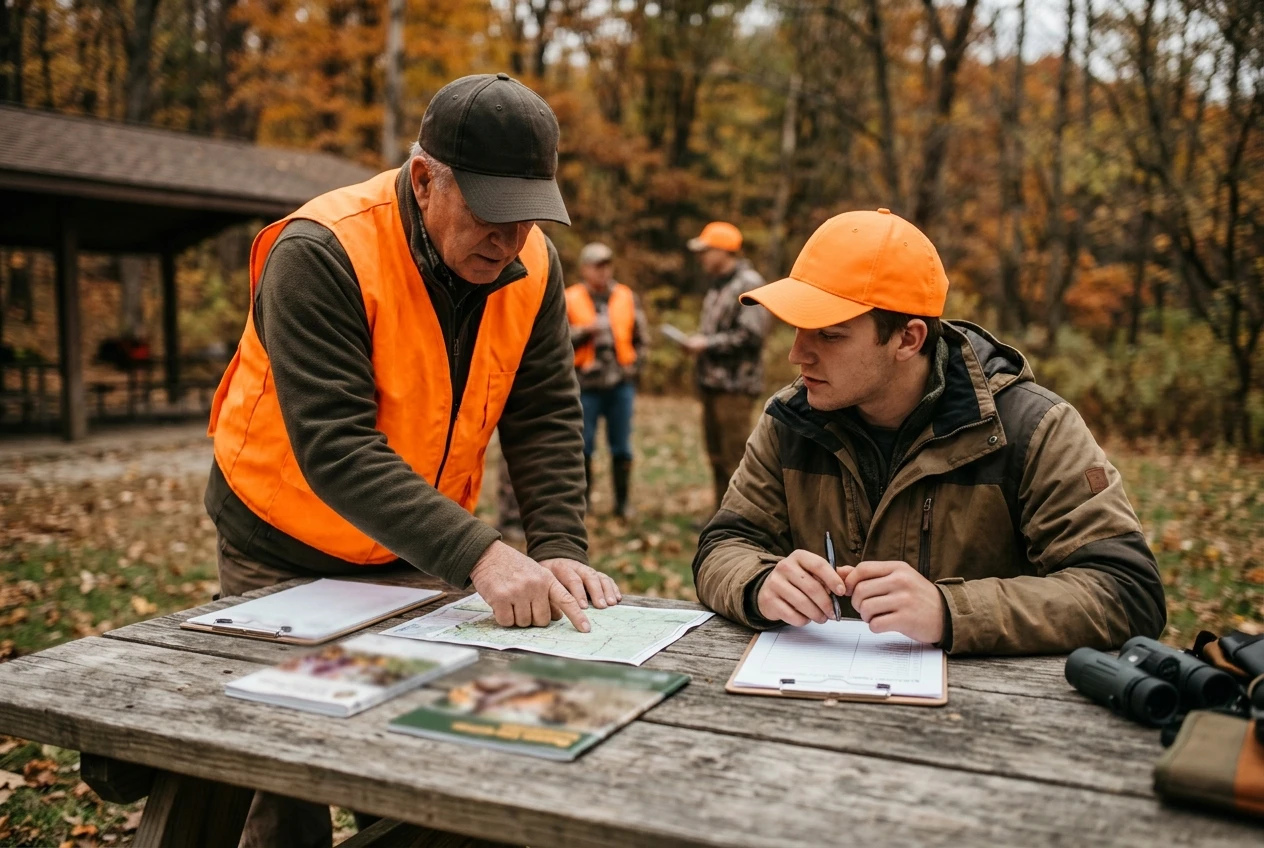
Download the current regulations booklet if there is one. You will use it at every step below, and it is the document wardens expect you to know.
Hunter education: what it covers, online versus in-person, and how long to allow
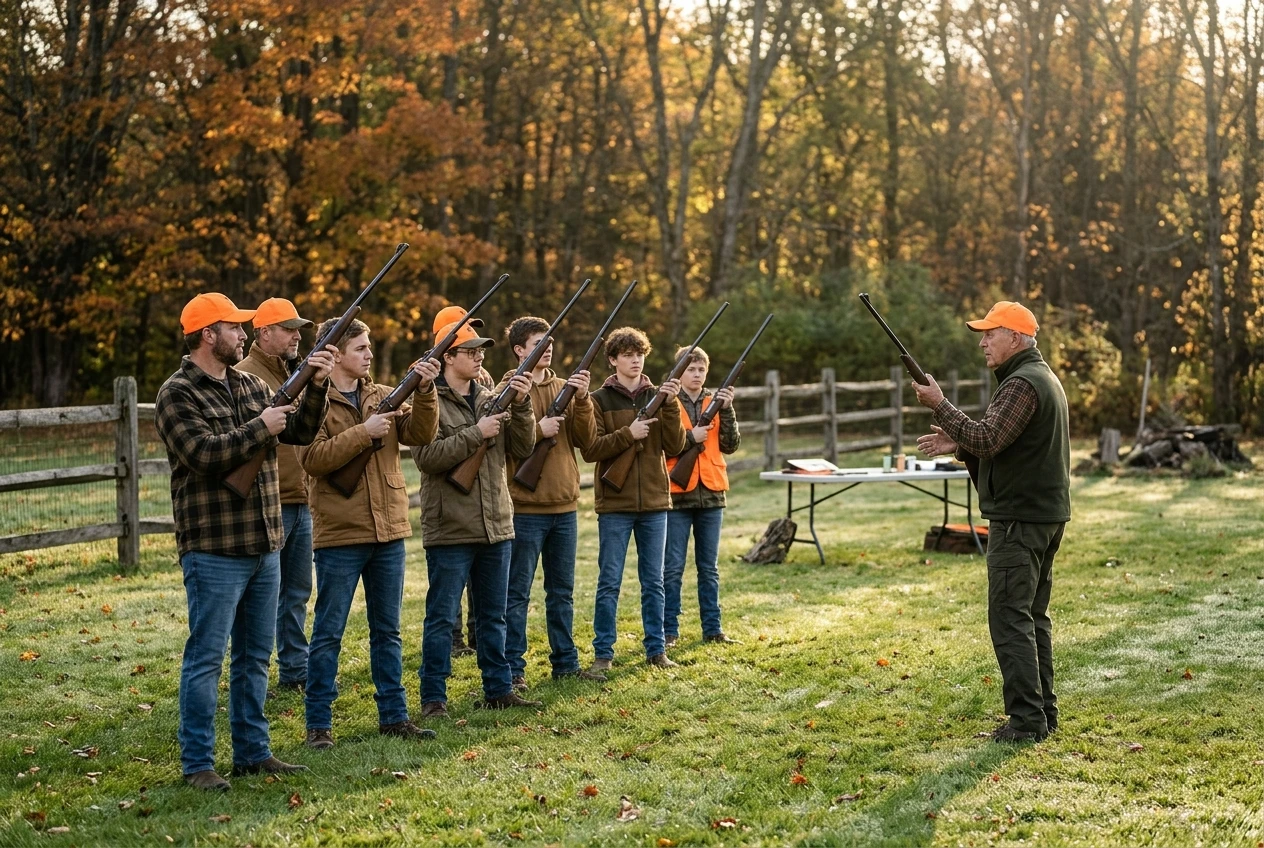
Most states require first-time hunters to complete a hunter education course before they can buy a license. Requirements vary. Some states exempt hunters above a certain age, and some offer a short-term or apprentice option that lets a newcomer hunt with a licensed adult before taking the course. Your agency’s hunter education page spells out which rules apply to you.
What the course covers
Hunter education courses generally teach firearm and archery safety, safe handling and transport of a weapon, wildlife laws, hunter ethics, game identification, shot placement, and field care of an animal. Many also cover basic survival and what to do if you get lost. You do not need to arrive knowing any of it.
Online, in-person, or a mix
States usually offer one or more of these formats:
- Fully in-person: a classroom course led by certified instructors, often over a weekend or several evenings.
- Online course plus a field day: you complete the coursework at home, then attend a hands-on session or take a proctored exam in person.
- Fully online: available in some states for some age groups.
The agency’s hunter education page lists approved courses. Some states work with private course providers that charge their own fee, and the agency page will say which providers it recognizes. A course that is not approved by your state may not count.
How long to allow
The coursework itself varies by state and format, so read the course description for the hours involved. The longer wait is often scheduling. In-person classes and field days can fill up, especially in the weeks before a season opens, and some are only held on certain dates. Look at the class calendar before you set your plans, and book early. If you want to hunt this fall and you are reading this in November, check your state’s remaining seasons first, because some close in the coming weeks and others run into winter.
When you pass, you receive a certificate or a student number. Keep a copy, and ask your agency whether it is also stored in your online license account.
What you need on hand before you buy
Gather these items before you open the license store. Most online systems time out, and nothing is more irritating than searching for a document halfway through checkout.

- Photo ID: a driver’s license or state ID. Some states ask for a driver’s license number or the last digits of a Social Security number to create your customer record.
- Proof of residency: residents usually pay less than nonresidents, and agencies define residency by how long you have lived in the state. Check the exact definition and what proof is accepted.
- Hunter education certificate or number: the system may look this up automatically, or it may ask you to enter it.
- Payment method: a card for online purchases.
- Contact details: an email address and phone number, since many agencies send confirmations and regulation updates electronically.
If you have a previous hunting license from another state, note that too. Some agencies accept an out-of-state hunter education certificate and some ask you to submit it for review.
License versus deer tag: what each one lets you do
These two items are separate, and mixing them up is a common first-timer error.
A hunting license is your legal permission to hunt in the state. It records who you are, that you meet the requirements, and that you are in good standing. On its own it usually does not allow you to take a deer.

A deer tag (sometimes called a permit, harvest authorization, or carcass tag) is permission to take a specific animal. It often says what kind of deer you may take, in which area, during which season, and with which weapon. After a harvest, many states require you to attach the tag to the animal or record the harvest right away, in a way the regulations describe.
Depending on the state, you may also need one or more of the following:
- A habitat or conservation stamp.
- A migratory bird or other special endorsement (only if you hunt those species).
- A harvest report or check-in with the agency after taking a deer.
- A drawing or lottery application, if tags for your area are limited.
Your regulations booklet lists exactly what a deer hunter needs. Read that section twice, and write down each item you need before you buy anything.
Choosing the right tag for your first season and your weapon
Tags are sorted by categories, and the categories differ by state. The most common ones are:
- Weapon type: archery, muzzleloader, and firearm seasons often have separate tags.
- Sex and age of deer: buck tags, antlerless tags, and either-sex tags.
- Zone or unit: the area where the tag is valid.
- Season dates: early, regular, late, or special seasons.
- Public or private land: some states or units distinguish between them.
Before you choose, answer three questions. What weapon will you hunt with? Where will you hunt, and which zone or unit does that land fall in? And when can you realistically go? Match your answers to the tag descriptions in the regulations.
Your weapon choice affects the season dates available to you as well as the tag. Archery seasons often start earlier and run longer than firearm seasons, but they ask for a different set of skills and equipment. If you are still deciding, the guide to bow hunting a deer explains what that route involves.
Some tags are available over the counter, and others require an application in advance. Application deadlines often fall months before the season, so if you find a limited-draw tag that interests you, check its deadline right away. For a first season, many beginners choose an over-the-counter tag in a zone close to home, because it is simpler and gives them more flexibility. That is a sensible approach, though your state’s options and your own circumstances decide what fits.
Check the legal weapon rules for your tag as well. Some areas restrict firearm types, minimum calibers, or require hunter orange. Confirm these before you spend money on gear.
What it all costs: a checklist for adding up your own total
Fees differ widely by state, residency, license type, and tag type, so a single national figure would only mislead you. Instead, build your own total from the agency’s fee schedule. Open the current fee page and work down this list:
- Hunter education course fee. Some courses are free and some charge. Add any exam or field day fee.
- Base hunting license. Choose the right residency category and age group.
- Deer tag or tags. Add the cost of each tag you need, for each weapon season you plan to hunt.
- Required stamps or endorsements. Include any habitat, conservation, or special-area fees.
- Application fees. If you are applying in a draw, check whether the application costs money even if you are not selected.
- Processing or transaction fees. Online sales often add a small service charge.
- Optional extras. Some agencies sell a printed copy, a replacement, or a combined package that may change the total.
- Gear you must have. Hunter orange, a legal weapon, and ammunition or arrows are not license fees, but they belong in your budget.
Write each line and its price in a notebook or spreadsheet, then add it up. If a fee page has a “package” or “combo” option, compare it with the sum of the individual items to see which is cheaper for the tags you actually need.
Also check which license year your purchase covers. Some licenses run on a calendar year and some on a season year, so a license bought now might expire sooner than you expect.
Where to buy and what to carry afield
Most agencies sell licenses through several channels:
- The agency’s online store or mobile app.
- Licensed vendors: many sporting goods stores, bait shops, and county offices act as sellers.
- Agency offices or regional field offices.
- Phone sales, in some states.
The online store is usually the quickest, but a vendor can help if you are unsure what to pick. The clerks sell these licenses all day and can catch an obvious mistake. They should not choose your tag for you, so bring your list.
After you buy, check each item for accuracy: your name, birth date, residency category, tag type, zone, and season dates. Fixing an error is far easier before the season than in the field.
Carry the following when you hunt:
- Your hunting license, in the form your state accepts (paper, printout, or digital).
- Your deer tag, ready to use as the regulations require.
- Your hunter education certificate if your state asks hunters to carry it.
- A photo ID.
- A pen or knife you can use to complete the tag, if your state requires you to notch or write on it.
If your state accepts a digital license, save a copy to your phone and keep a paper copy in a waterproof bag. Cell coverage in the woods is unreliable, and a dead battery will not satisfy a warden.
Common first-timer slip-ups that cost a season
Most of these are avoidable with a few weeks of lead time.
- Waiting until the week before the season to start hunter education. Classes fill up. Start early.
- Buying a license and assuming it covers a deer. Without the right tag, you are not legal to harvest one.
- Picking the wrong weapon tag. An archery tag does not allow you to use a rifle, and the reverse is also true.
- Hunting outside the tag’s zone or dates. Check the unit boundaries on the agency’s map.
- Missing a draw deadline. Limited tags can require applications long before the season.
- Ignoring a post-harvest requirement. Some states want a harvest report or carcass check-in within a set time.
- Relying on a third-party summary. Always confirm rules in the agency’s official regulations.
- Forgetting that rules change. Read the current regulations each year, even after your first season.
Frequently Asked Questions
Do I need hunter education to get a deer hunting license?
In most states, first-time hunters must complete hunter education or show proof of a previous certificate. Some states have age-based exemptions or an apprentice option. Your state agency’s hunter education page lists the rules that apply to you.
Can I take hunter education entirely online?
It depends on the state. Some offer fully online courses, many combine online study with an in-person field day or exam, and some require a classroom course. Use only courses your agency lists as approved.
Does my hunting license include a deer tag?
Not always. Some states bundle a deer tag with a license, and others sell tags separately. Read the license description and the regulations to confirm what is included.
Is my hunter education certificate valid in other states?
Many states recognize each other’s hunter education certificates, but each agency decides for itself. If you plan to hunt out of state, check that state’s wildlife agency before you buy.
How far ahead should I apply?
As early as you can. Over-the-counter licenses are often available until the season, but courses and limited-draw tags have earlier deadlines. Check the dates on your agency’s website.
What if I lose my license or tag?
Contact your wildlife agency. Many can reissue a license or direct you to a vendor who can. A used or lost tag has its own rules, so ask before you hunt.
Final Thoughts
The order of operations is short: find your agency’s official pages, finish hunter education, gather your documents, buy the license, choose and buy the right tag, then confirm everything printed on them. Add up your own costs from the fee schedule so there are no surprises at checkout.
Once the paperwork is finished, you can turn to the part that takes longer: scouting, gear, and planning the hunt itself. Read Your First Deer Season, Step by Step for the full walkthrough, from hunter education through getting the deer home.