Most first-season shopping lists are built to sell gear, not to get a new hunter through opening weekend. This one is built around a single question: what happens in the woods if you leave this item behind? The answer sorts deer hunting gear for beginners into three tiers.
- Tier 1: leaving it behind makes the hunt illegal or unsafe.
- Tier 2: leaving it behind ends your sit early, costs you a clean shot, or spoils the meat.
- Tier 3: leaving it behind costs a little comfort or convenience.
Spend your money on Tier 1 first, then Tier 2, and treat Tier 3 as optional until you have a season behind you. Rifle and caliber choice has its own guide, so the weapon section here covers only what to buy versus borrow.
Start with the gear that keeps you legal and safe
Nothing else on the list matters if you cannot legally carry a weapon into the field or you get hurt getting there. These items are the same for every hunter, whatever the budget.
Your license, tag and hunter education proof. Carry them on your person, in a waterproof sleeve or a zip bag. Rules differ by state on how a tag must be carried and attached to the animal, so read your state’s regulations before opening day. If you have not sorted your tag yet, the license guide covers hunter education, tags and costs.
Blaze orange. Most states require some amount of fluorescent orange for firearm seasons, and the amount and placement vary. A vest and a hat are the cheapest way to satisfy most requirements, but check your state’s exact rule. Even where it is not required, wear it on any day firearm hunters are in the woods.
A fall-arrest harness, if you hunt from a tree stand. Falls from stands are a leading cause of hunting injuries. A full-body harness, attached from the moment you leave the ground until you are back on it, is a Tier 1 item. Use one that matches your stand and follow the maker’s instructions for the tether and the lineman’s rope. If you hunt from a ground blind or the base of a tree, you do not need this.
A first-aid kit and a way to call for help. A small kit with bandages, gauze, tape and any personal medication fits in a pocket of your pack. Your phone is the communication tool, so carry a charged battery pack for it. Cold drains phone batteries quickly, and keeping the phone in an inside pocket helps.
Someone who knows where you are. This costs nothing. Tell a person which property or area you are hunting, where you will park, and when you expect to be out. Agree on a time at which they should start worrying.
Clothing and boots: dressing for sitting still in the cold
Deer hunting means long stretches of sitting still, often before dawn, and cold is what ends most first-timers’ sits. You do not need a camouflage wardrobe. You need to stay warm and dry while motionless, and to stay quiet when you move.
Layers and fabrics
Build your outfit in three layers:
- Base layer: merino wool or a synthetic. Avoid cotton, which holds sweat and chills you.
- Insulating layer: fleece or wool, which you can add or remove as the temperature changes.
- Outer layer: a windproof jacket and pants, ideally in a fabric that does not rustle when you shift.
You will warm up on the walk in and then cool off fast when you stop. Dress slightly cool for the walk, carry your insulating layer, and put it on when you reach your spot. Sweating before you sit down is the most common cause of being cold on stand.
Boots, gloves and hat
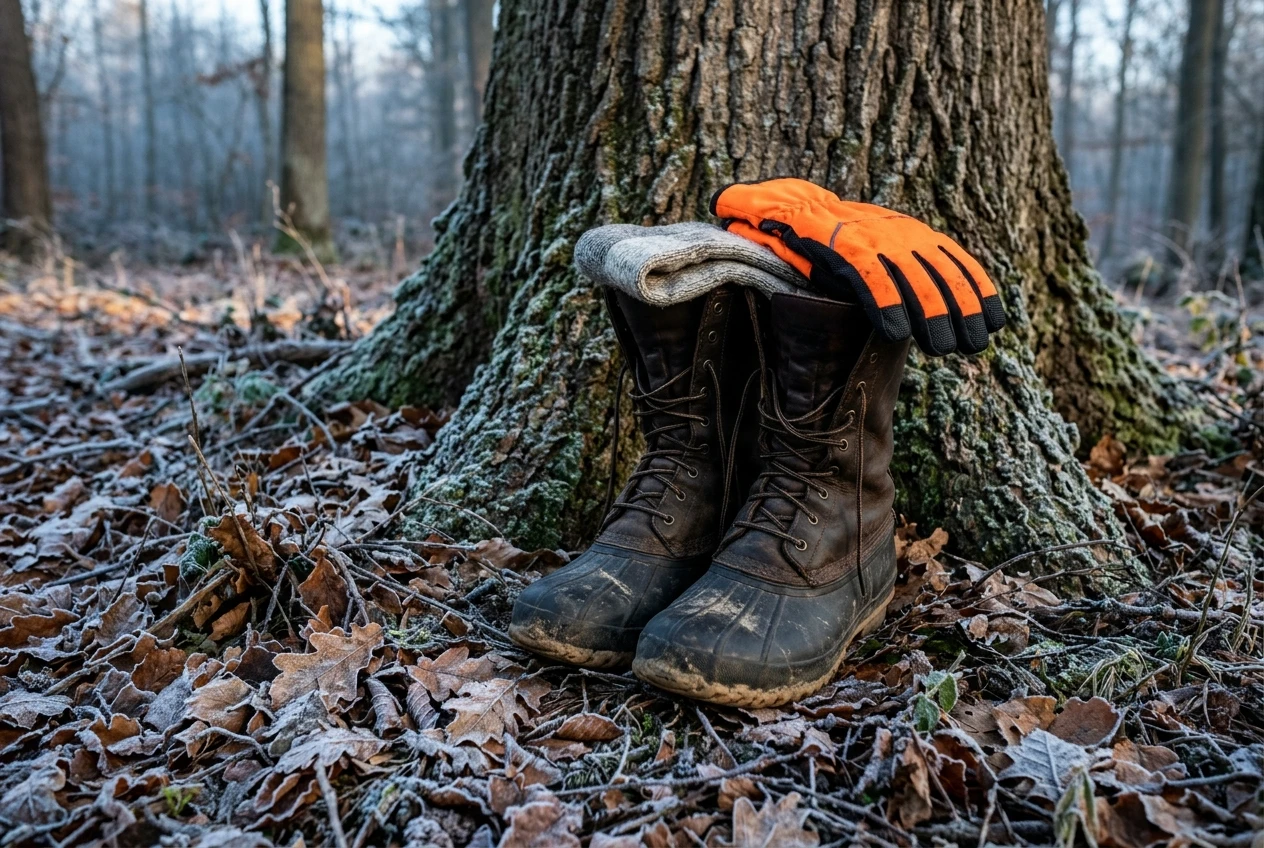
Your feet are where cold starts, and you will be on them walking in and then still for hours. Insulated, waterproof boots that you have already broken in are worth more than any camouflage jacket. Wear them on a few walks before the season so you find the blisters at home rather than a mile from the truck. Wool socks matter as much as the boots, and a spare pair in your bag is cheap insurance.
Bring thin gloves you can shoot in and a warmer pair or mitts for sitting. A warm hat that fits under or beside your orange hat is also worth packing. Chemical hand warmers are inexpensive and work well in a pocket or glove.
Camouflage
Match your clothing to your surroundings in broad terms: earth tones in the woods, nothing shiny, no bright white. Deer see motion far better than they notice pattern, so how still you sit and where the wind is matter more than the camo brand. A single quiet, well-fitting outfit in muted colors is enough for the first season.
Your weapon setup: what to buy and what to borrow
If you do not own a firearm or bow, the weapon is the largest cost, and it is also the item you can most easily borrow. A mentor, friend or relative who hunts may lend you a rifle or shotgun that is already sighted in. If they do, the lesson is to spend your range time with that exact gun and ammunition.
If you do buy, the rifle guide covers calibers and models. Check your state’s legal methods first, since some areas limit firearm hunters to shotguns with slugs or to certain cartridge types.
What belongs in this tier regardless of who owns the weapon:
- Ammunition made for deer hunting. Use the load that matches your caliber, and shoot the same load at the range that you carry in the field.
- Hearing protection for the range. Practice is where most of your shooting happens, and repeated unprotected shots damage hearing.
- A sling or carry method. You will walk with this weapon for a long time, and a sling keeps your hands free for a flashlight or a climbing rope.
- Range time. Confirm the zero, then practice from the position you will use in the field, such as sitting with a rest. A clean shot is the result of this practice and not of any accessory.
A shooting rest, such as shooting sticks or a bipod, is a good addition if you will shoot from the ground. If you sit in a stand or blind, a pack or the railing can serve as a rest.
Seeing and finding: optics, light and navigation basics
You must be able to identify your target and what is behind it, find your way in and out in the dark, and mark where the deer was when you shot.
Binoculars. A basic pair does more for a beginner than a rifle scope upgrade. They help you check that an animal is legal, look at the area behind it, and see movement at the edge of a field. A midrange 8x or 10x pair is a sensible starting point, and the choice of model matters less than whether it is comfortable and clear in low light.
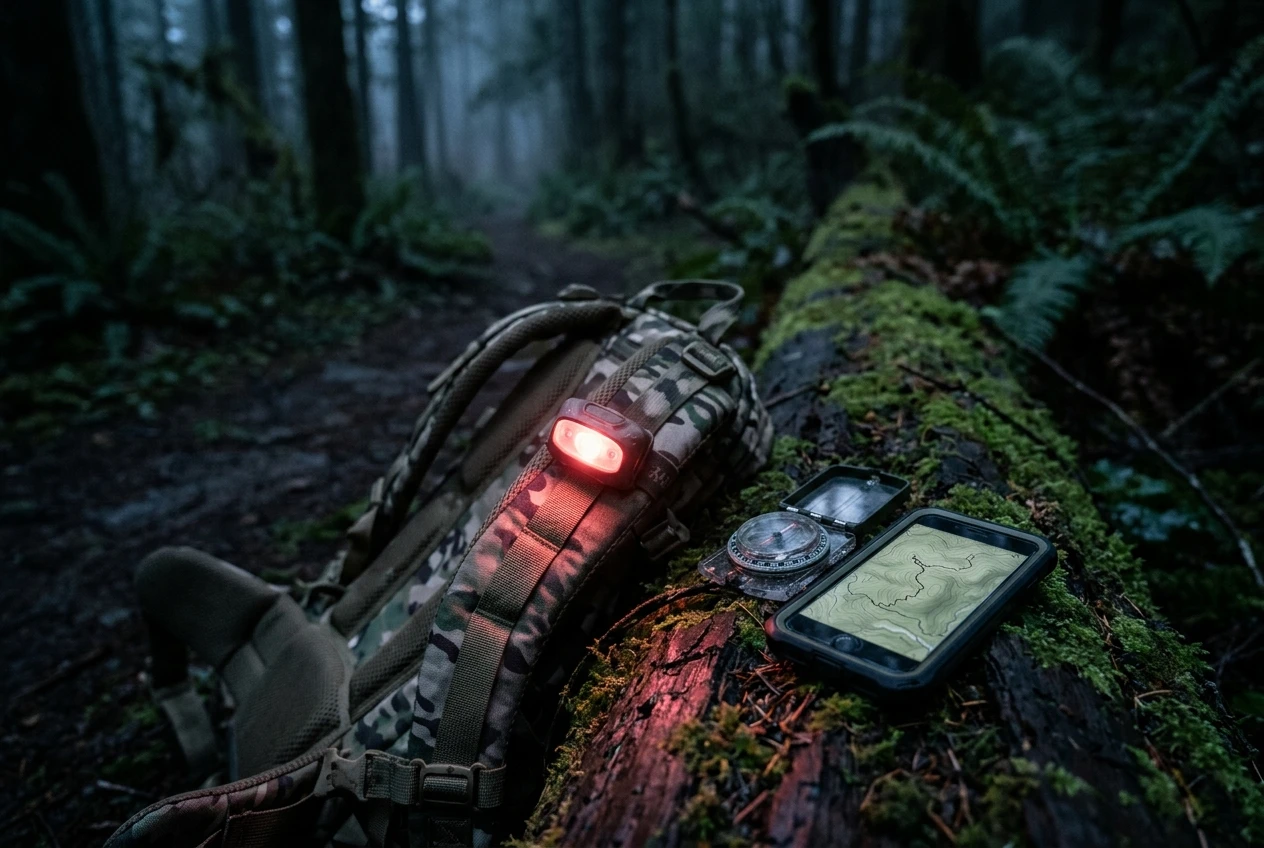
A headlamp. You will likely walk in before sunrise and out after sunset. A headlamp keeps both hands free. Pack spare batteries, and consider a model with a red light mode, which is less likely to disturb deer on the approach. Test it the night before.
Navigation. Download an offline map of your hunting area on your phone before you leave home, since cell service is often poor in good hunting country. Mark your parking spot and your stand location. Carry a simple compass and know how to use it as a backup if your phone dies. Know the property boundaries too, because hunting across a line you cannot see is a legal problem.
A rangefinder is useful but belongs in Tier 3 for most beginners. If you plan to shoot at a modest range from a known stand, you can pace off or note landmarks ahead of time instead.
Field dressing and getting the deer out: the kit people forget
New hunters spend most of their budget on the shot and then discover that the work begins after it. A deer left in warm conditions can spoil, so this kit belongs in Tier 2: skip it and you risk the meat even after a perfect shot.
The core kit:
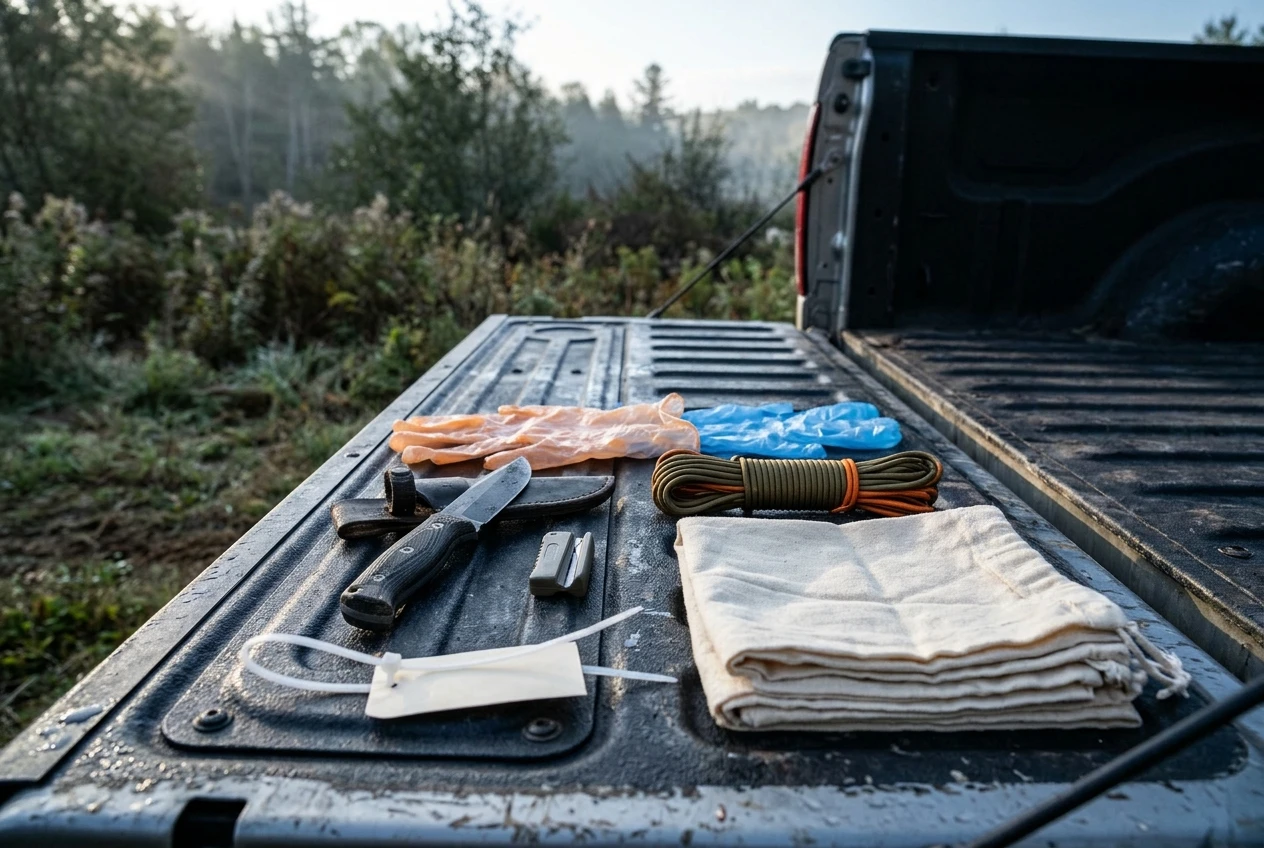
- A sharp knife. A fixed blade or a sturdy folding knife with a blade of moderate length is enough. Sharpness matters more than size, so bring a small sharpener or a spare blade.
- Disposable gloves. Long field-dressing gloves keep your arms clean and are cheap. Pack several pairs.
- Cord or rope. Use it to tie off the deer’s legs, to drag it, or to hang it.
- Game bags. These keep meat clean and let it cool when you quarter or process the deer.
- Paper towels or rags and a water bottle. You will want to clean your hands and the cavity.
- A tag holder or a zip tie. Your license usually requires the tag to be attached to the animal, so follow your state’s rule.
- Plastic bags. These are useful for the heart and liver if you plan to keep them.
The hardest part of a successful hunt is often moving the animal. A drag harness or a sturdy rope lets you pull a deer over a short distance, and a game cart helps if your route is level and clear. Many beginners solve this problem by hunting with a friend, who can carry one end. Plan before the hunt how you will get the deer to the truck and where you will take it afterward, whether to a processor or to your own kitchen. Walkthrough details for after the shot are in the first-season guide.
Gear a beginner can skip in the first season
The hunting industry sells a lot of products that help experienced hunters at the margins. Here is the gear you can leave on the shelf this year, or borrow if someone offers it.
- Scent-elimination sprays and special laundry products. Wind direction determines whether a deer smells you. Washing your clothes in unscented detergent and hunting with the wind in your face accomplish most of what a spray promises.
- Expensive camouflage with brand-name patterns. Muted, quiet clothing in the right warmth rating does the job.
- Calls, rattling antlers and decoys. These take practice to use well, and a beginner who uses them wrongly can scare deer. Learn to sit still first.
- Trail cameras. They are useful for scouting, but they add cost and need setup time. Borrow one or skip it until you have a property you hunt repeatedly. Check whether your state or the land you hunt restricts them.
- Premium rangefinders and high-end optics. A mid-priced pair of binoculars will serve you for years.
- Climbing stands, saddles and elaborate blinds. Begin from the ground or from a stand provided by the landowner or a mentor, and add a stand once you know you want one.
- ATVs and large game carts. These matter on big properties and are unnecessary on short drags.
- A pile of knives and gadgets. One good knife and a way to sharpen it covers the job.
A realistic first-season budget, from must-have to nice-to-have
Prices change by region and retailer, so this section ranks purchases instead of quoting figures. Buy in this order and stop when your budget runs out.
Tier 1: buy or confirm first
- License, tags and hunter education
- Blaze orange
- Fall-arrest harness, if you hunt from height
- First-aid kit and a phone battery pack
- Boots and socks that keep your feet warm and dry
- Ammunition and range time with your weapon
Tier 2: buy next
- Layered clothing in wool or synthetic fabric
- Binoculars
- Headlamp and spare batteries
- Knife, gloves, game bags and cord
- A pack to carry it all
- A means of moving the deer, such as a drag rope or harness
Tier 3: add later, if at all
- Rangefinder
- Shooting sticks or a bipod
- Trail cameras
- Game cart
- Specialty calls and decoys
Used gear is a reasonable way to stretch money in Tier 2 and Tier 3, especially packs, binoculars and carts. Do not buy used safety equipment such as a harness, since you cannot know its history. Ask hunters you know what they have in the garage, because many will lend or sell inexpensively.
How to pack your bag the night before
Pack at home with the lights on, not in the dark at the truck. Work through this list the evening before:
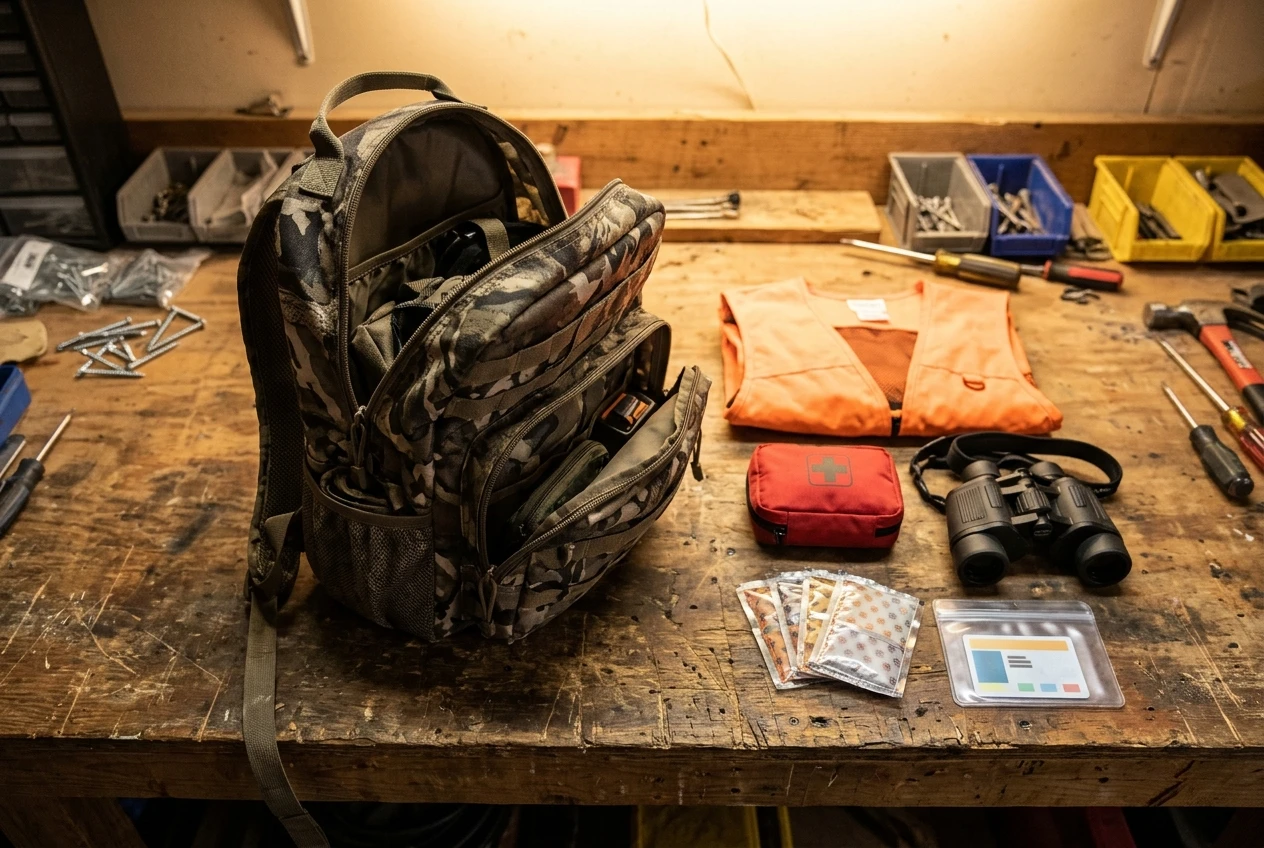
- Paperwork: license, tag, hunter education card and a pen, in a waterproof bag.
- Safety: blaze orange, harness if you need one, first-aid kit, charged phone and battery pack, headlamp with fresh batteries.
- Clothing: your insulating layer, spare gloves and socks, hat and hand warmers.
- Optics and navigation: binoculars, compass, and the offline map already loaded on your phone.
- Field kit: knife and sharpener, gloves, game bags, cord, tag holder, paper towels and plastic bags.
- Food and water: more water than you think you need, and snacks that do not rustle in a wrapper.
- Weapon: unloaded, with ammunition packed separately until you are in the field and following your state’s transport rules.
Lay out your clothes, set the alarm, and check the weather and your legal shooting hours. Shooting hours differ by state, so look them up for your location and date. Tell your contact person your plan before you go to bed.
Last words
A first season goes best with a short, well-chosen kit that you have tested before opening day. Warm boots, a legal tag, a harness if you need one, and a sharp knife will serve you better than a shelf of accessories. Add equipment season by season, based on what you wished you had while sitting in the woods.
For the full timeline from hunter education to getting the deer home, read Your First Deer Season, Step by Step.