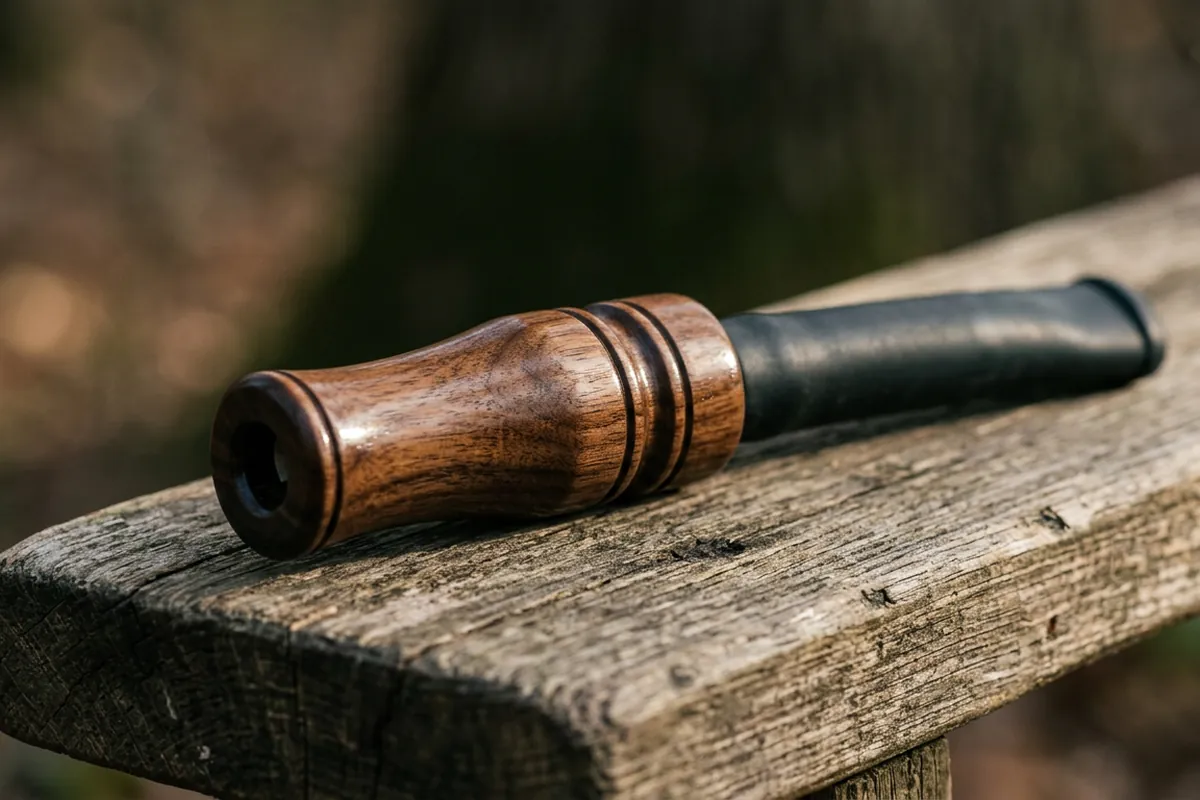
Why do some hunters sound like deer on their first evening in a stand while others sound like hunters all season? The gap is almost never the price of the call — it is the match between the call’s design and the way a beginner actually learns. The best grunt call for deer hunting, for a new caller specifically, is the one whose adjustments can be practiced one at a time, in a truck or a backyard, before a live herd ever hears them.
Grunt calls teach through three different designs, and each one teaches differently. Fixed-tone tubes remove every variable except breath and timing — the purest way to build honest muscle memory. Position-adjusted tubes — tone dials, O-rings, and expandable hoses — give a learner visible, physical settings to move between once the first sound is consistent. Multi-mode selectors collapse an entire lanyard into one slide, which is the most versatile path and the one that most needs home practice before field duty. None of the three is wrong; each simply suits a different temperament.
Two habits turn any of these into real calling. The first is one-sound discipline: consistent on a single tone beats wandering through five half-learned ones, and deer grade consistency, not variety. The second is volume honesty — a beginner’s soft, correct grunt beats a loud, wrong one every single sit, because pressured deer hear wrong sounds as danger. Each design carries a practice reality of its own, and the difference shows in the field.
Quick Picks
Best Overall: PRIMOS Bottle Neck Grunt Call — three fixed tone positions that a beginner learns one at a time.
👉 Practice the Bottle Neck on Amazon
Best Multi-Sound Value: Flextone Natural Bone Grunt’R — an expandable hose that bends tone with your hand.
👉 Expand the Grunt’R on Amazon
Best Full Chart: Illusion Systems Extinguisher — the slide selector that grows from first grunt to the whole vocabulary.
👉 Learn the Extinguisher on Amazon
Best Fixed-Tone: WoodHaven Intimidator — hand-tuned consistency for hunters who would rather master than adjust.
👉 Focus the Intimidator on Amazon
Comparison Table
| Product Name | Best For | Price Range | Check Price |
|---|---|---|---|
| PRIMOS Bottle Neck Grunt Call | Fixed three-tone learning | Mid | Check Price |
| Hunters Specialties True Talker OG Deer Call | Five sounds under the fingers | Budget | Check Price |
| Flextone Natural Bone Grunt’R | Expandable-hose tone bending | Budget | Check Price |
| Illusion Systems Extinguisher | Slide-selector full chart | Mid | Check Price |
| Knight & Hale HD Grunter | Cherry-body fundamentals | Mid | Check Price |
| WoodHaven Intimidator | Fixed-tone mastery | Mid | Check Price |
| Quaker Boy Ridge Runner | Visible-reed practice | Budget | Check Price |
Buyer’s Guide
Start with one sound and one setting. The consistent grunt — same tone, same cadence, same volume — does more for a first season than any vocabulary, because it is the one sound a beginner can reproduce under buck pressure. Pick a call whose default setting produces that sound, practice it until it bores you, and only then move to the second tone. Every adjustable call on this board rewards the same sequence: one setting, one sound, consistent, then the next. The learners who stall are almost always the ones who opened the whole chart in week one.
Choose between adjustable and fixed by how you like to learn. A tone dial, O-ring, or expandable hose gives visible progress — you move the setting, the sound changes, the connection teaches itself. A fixed tube removes the crutch entirely and forces breath and timing to do all the work, which is harder for two weeks and stronger for years. Hunters who like gear with settings buy adjustable; hunters who want to build a permanent skill buy fixed. Both paths produce real callers — the mistake is buying one while expecting the other’s experience.
Practice where mistakes are free, then earn the stand. A truck cab, a backyard, a car ride with the windows up — every minute there costs nothing, while the same mistakes on a live stand teach the local herd what your lanyard sounds like. Run the call through cold mornings, wet weather, and gloved hands before the season, because the field test is never fair-weather. The best grunt call for deer hunting is the one that survived that practice and still sounds like a deer by opening day — anything else is a noisemaker with a lanyard.
One Mistake to Avoid: Buying Range Before Reps
The beginner’s classic error is buying the most versatile call on the shelf first. A ten-mode selector in week one produces ten half-learned sounds and zero confident ones, and the season’s stands all hear the difference. Versatility earns its place later — the slide that covers the full chart is a second-call purchase, not a first one, and even then only after a single grunt sound has become automatic. Start where the reps cost the least: one tone, one setting, one sound a deer would answer. Range can be added to skill; it cannot substitute for it.
Best Grunt Call for Deer Hunting: 7 Easy-to-Use Options for Beginners Learning Deer Calling
The seven below sort the beginner field by teaching design — three fixed-format tubes, three physically adjustable designs, and the slide-selector chart call. Each card carries the practice facts that decide progress: what adjusts, what stays fixed, what the reed does in cold and wet, and how much home practice each design honestly demands before it meets a live herd.
1. PRIMOS Bottle Neck Grunt Call
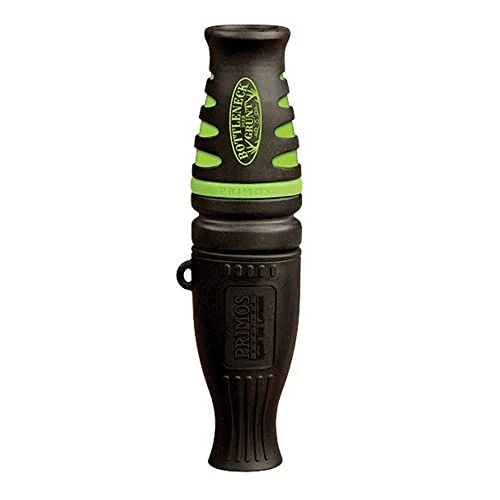
Best for: A three-tone barrel that gives a beginner fixed places to learn.
- Low, medium, and high tone positions: the adjustable reed offers three fixed settings — set one, sound consistent on it, then experiment with the next instead of guessing in the field.
- One-handed design: the listed grip runs the call one-handed, leaving the other hand free on the bow or rail.
- Rubber body: the exterior insulates the reed through cold sits and survives the drops every first-season lanyard takes.
- Lanyard included: it hangs at chest height from the box onward — no separate rig to buy before practice starts.
- Compact barrel form: short enough to live in a jacket pocket, which means it actually comes on every sit.
Pros:
- Three fixed tone positions to learn one at a time
- One-handed operation
- Lanyard included from the box
Cons:
- Fixed positions cap fine tone work
- Rubber body demands careful storage
- Top-shelf ask of the beginner class
2. Hunters Specialties True Talker OG Deer Call
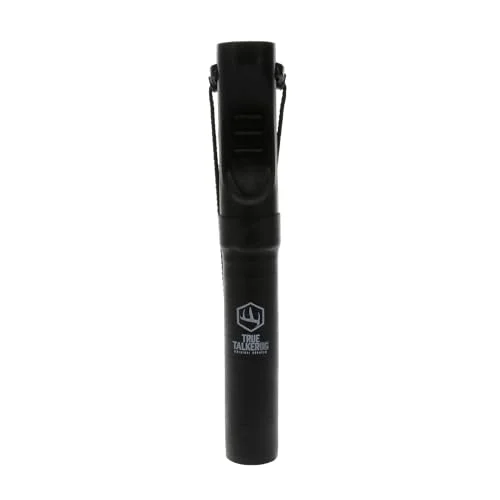
Best for: One call that teaches five sounds under the fingers.
- Five vocalizations: the listed range runs fawn bawls through dominant buck grunts — a learner’s whole first season of sounds on one tube.
- Rubber-band finger tuning: pressure on the flexible bands reshapes the tone mid-call, so the adjustment lives in your hands rather than in parts.
- Warm, subtle tone class: the flexible body produces softer grunts than rigid tubes — the close-woods sound beginners actually need on pressured ground.
- Lanyard included: hangs ready from day one.
- Boundary-band honesty: the score sits exactly at the four boundary — a working tool with a real learning curve, stated plainly.
Pros:
- Five sounds on one call
- Finger-tip tuning teaches the language
- Mid-band ask for the range
Cons:
- Exactly at the four boundary — stated plainly
- Finger tuning takes deliberate practice
- Subtle volume is close-range duty
Work the True Talker on Amazon
3. Flextone Natural Bone Grunt’R
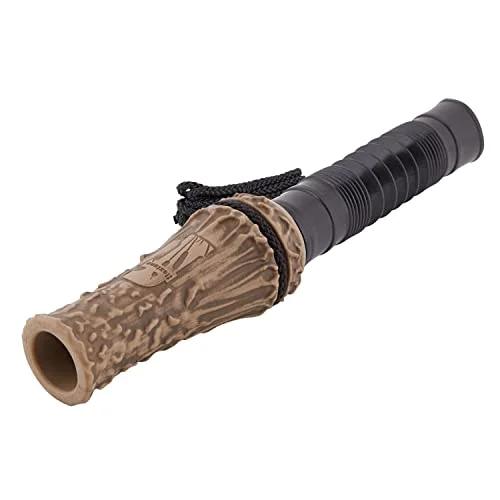
Best for: An expandable tube that bends tone with hand position.
- Expandable hose: stretching and compressing the tube bends pitch between buck grunts, doe bleats, and fawn bawls — the tone control is physical and visible.
- Three sound families: the listed range covers the herd’s main voices, so one call answers three conversations.
- Flexible rubber body: the material survives cold mornings and pack compression without cracking.
- Deliberate-change learning curve: the tube only changes tone when you move it — the practice is making changes on purpose rather than by accident.
- Ask check: the live figure stepped up fifty cents over its recent ask at verify — confirm at order.
Pros:
- Three sound families in one tube
- Tone bends with visible hand movement
- Bone-look housing reads natural
Cons:
- Tone changes need deliberate practice
- Flex body wants stress-free storage
- Ask stepped up at verify
4. Illusion Systems Extinguisher
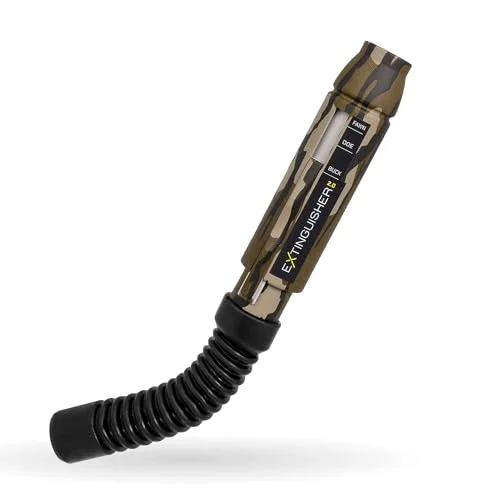
Best for: A slide selector that scales from first grunt to full chart.
- 10-in-1 ModiSlide: the sliding chamber selects buck, doe, and fawn modes — a beginner starts on grunt and grows into the rest without buying another call.
- Snort-wheeze mode: the dominant-challenge sound rides the same slide, ready when the season asks for it.
- Freeze-resistant build: the exterior keeps working through the late-season mornings that shut wet calls down.
- Practice-first selector: more modes than a grunt-only tube means the slide earns home practice before field duty.
- Deepest calling record on this board: the largest feedback base of any entry here — thousands of callers have graded this exact tube.
Pros:
- One slide grows with your skills
- Freeze-resistant for late season
- Deepest record of any entry here
Cons:
- Highest ask of the beginner class
- Slide needs home practice first
- One chamber serves many voices
Master the Extinguisher on Amazon
5. Knight & Hale HD Grunter
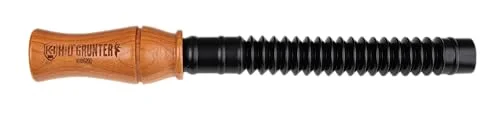
Best for: A classic cherry-and-hose tube for fundamentals-first learning.
- Quick-adjust reed: tone changes without disassembly — a dial-in step that takes seconds at the truck.
- Extendable tube: length shifts pitch the same physical way the Grunt’R does — pull for one voice, collapse for another.
- Hardwood cherry body: the rigid wood barrel carries the classic resonance flexible bodies trade away.
- Simpler tube-and-reed format: fewer moving parts than slide selectors — the fundamentals-first path for a first call.
- Thin-record honesty: the feedback base on this listing is tiny — vet the recent comments before committing the premium ask.
Pros:
- Quick-adjust reed tunes in seconds
- Cherry body resonance
- Simple format to learn on
Cons:
- Very small feedback base — verify first
- Premium ask for the class
- Fixed reed limits fine tone work
Start the HD Grunter on Amazon
6. WoodHaven Intimidator
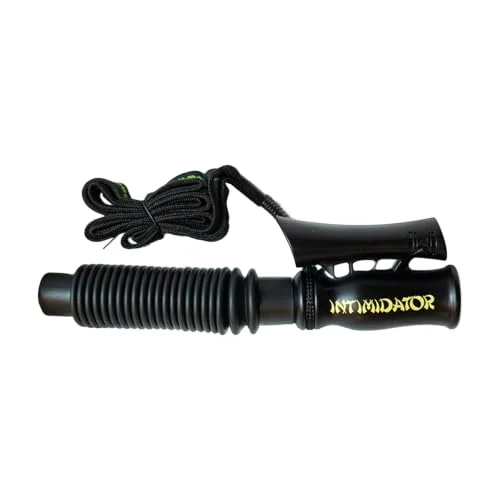
Best for: A fixed hand-tuned tube for hunters who would rather master than adjust.
- Fixed hand-tuned tone: no O-rings, slides, or settings — breath control and timing are the only variables, which is exactly the discipline a beginner needs to build.
- Grunt plus snort-wheeze: the two mature-buck sounds run from one dedicated tube.
- Inflexor tube included: the companion sleeve shapes the sound and rides the same lanyard.
- Repeatable practice: the same setup every sit makes muscle memory honest — what you practice is what you hunt.
- Custom-call lineage: WoodHaven builds from a custom-call workshop pedigree, and the Intimidator is the line’s flagship name.
Pros:
- Fixed tone builds honest muscle memory
- Two mature-buck sounds
- Custom-call sound quality
Cons:
- No tone adjustment by design
- The wheeze takes real lung practice
- Two sounds only — no bleat range
Dial the Intimidator on Amazon
7. Quaker Boy Ridge Runner
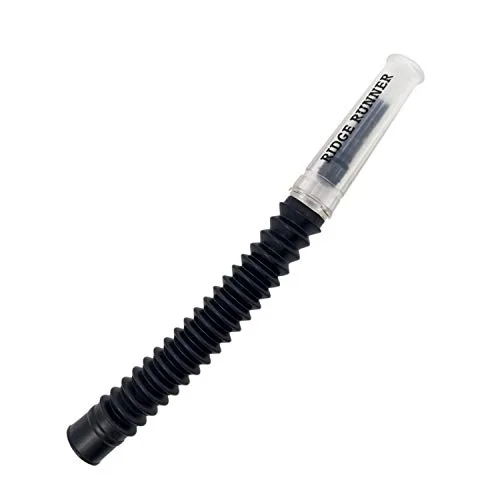
Best for: A see-through dual-tone tube that shows the reed working.
- Dual-tone O-ring design: the ring position and tube length switch tone configurations — set one configuration, learn it consistent, then move the ring.
- No-stick/no-freeze tongue: the listed reed detail keeps the call working through cold, wet mornings when moisture glues lesser reeds shut.
- Clear barrel: watching the reed respond while you practice is a genuine learning aid — you see what your breath is doing.
- Start-single discipline: the two configurations reward the same one-setting-at-a-time approach as every other tube on this board.
- Manual reed reality: breath practice is required — the see-through barrel shows mistakes as clearly as progress.
Pros:
- O-ring tone switching
- No-freeze reed for wet cold
- Clear barrel makes practice visible
Cons:
- Manual reed demands breath work
- Two configurations cap the range
- Mid-band score, stated plainly
Stretch the Ridge Runner on Amazon
Frequently Asked Questions
Q1: What makes a grunt call easy for beginners?
A: Three things: a default setting that sounds right immediately, adjustments that move one variable at a time, and a body that survives drops and cold mornings. Fixed-tone tubes are easiest to sound correct on because there is nothing to set wrong; position-adjusted tubes are easiest to learn from because the cause and effect is visible. The common thread on every beginner-appropriate call is that consistent sound costs minutes of practice, not months — anything harder belongs to a second season.
Q2: How long does it take to learn deer calling?
A: The basic grunt takes an afternoon of honest practice; sounding consistently good takes a few weeks of short sessions. The wrist-flip bleat cans aside, tube calls reward ten minutes a day far more than one long session — breath control is muscle memory, and muscle memory builds in small repetitions. Give it a month of truck-cab practice before the season and the first live stand will feel familiar instead of experimental. The learners who struggle are the ones whose first attempt happens at a deer.
Q3: Should a beginner start with an adjustable or fixed grunt call?
A: Pick by learning temperament, not specs. If visible settings help you — a dial, an O-ring, an expandable hose — buy adjustable and learn one position at a time. If you would rather build the skill that works on any call, buy fixed and let breath and timing carry everything. The honest trade: adjustable calls sound acceptable sooner, fixed calls build callers who sound acceptable on everything. Both are on this board, and both work — the only wrong answer is switching designs every month.
Q4: How often should I grunt while hunting?
A: Less than instinct suggests. A sequence or two every thirty to forty minutes covers a sit; calling every few minutes trains the herd to your noise. Keep the volume matched to the ground — soft grunts for close, pressured woods, fuller volume for field edges and drainages. And stop after a response: a buck answering the call has already told you where he is, and the next sound he wants to hear is another deer, which means silence and stillness from you.
Q5: What should I practice first with a new grunt call?
A: The contact grunt — a short, soft, single note that reads as a buck communicating without urgency. It is the most forgiving sound in the vocabulary, it works all season, and every other sound builds on the same breath control. Practice it until ten in a row sound identical, add the cadence of a tending grunt second, and leave the snort-wheeze for a season when the fundamentals are automatic. One boring, repeatable note is the whole foundation the fancy sounds stand on.
Final Verdict
If you want the best grunt call for deer hunting that teaches fast, forgives mistakes and grows with the season, don’t overthink it—these are already:
✔ Tone systems, reed designs, and body materials follow each maker’s own call design, stated plainly on every card.
✔ Fixed, adjustable, and selector designs each carry their practice reality — what a beginner must rehearse before the field.
✔ One-sound discipline runs the board: consistent beats versatile for a first season, and every card says so.
Best Overall – PRIMOS Bottle Neck Grunt Call
Best Multi-Sound Value – Flextone Natural Bone Grunt’R
Best Full Chart – Illusion Systems Extinguisher
Best Fixed-Tone – WoodHaven Intimidator