The question “when is the deer rut” has no single answer, because the rut depends on where you hunt, and it is not a date on a calendar. It is a stretch of weeks in which bucks and does breed and deer behave differently than they do the rest of the season. For a first-timer who can only take a few days off work, knowing which stretch matters in your area is worth more than any gear upgrade.
This article is not a list of season dates. You already have those from your state agency. It is about timing your sits inside the season you have.
Why Nobody Can Give You One Rut Date
Whitetail breeding is driven mostly by the shortening daylight of autumn, which is why the timing is fairly consistent in a given area from one year to the next. It also means the timing shifts with geography. Deer in the northern states generally breed earlier in the fall than deer in parts of the Deep South, where breeding can run much later and spread over a longer period.
Weather does not change when breeding happens, but it changes when deer move. A warm, windy, or rainy day can keep deer bedded through hours when they would otherwise be walking. A cold front can send them up on their feet.
So any article that says “the rut is November 10 to 15” is guessing for most of its readers. What you can do is learn the pattern for your own county and plan around it.
The Five Phases of the Rut in Plain Terms
Hunters split the rut into five phases. The names are informal and the edges blur, but they describe real changes in behavior.
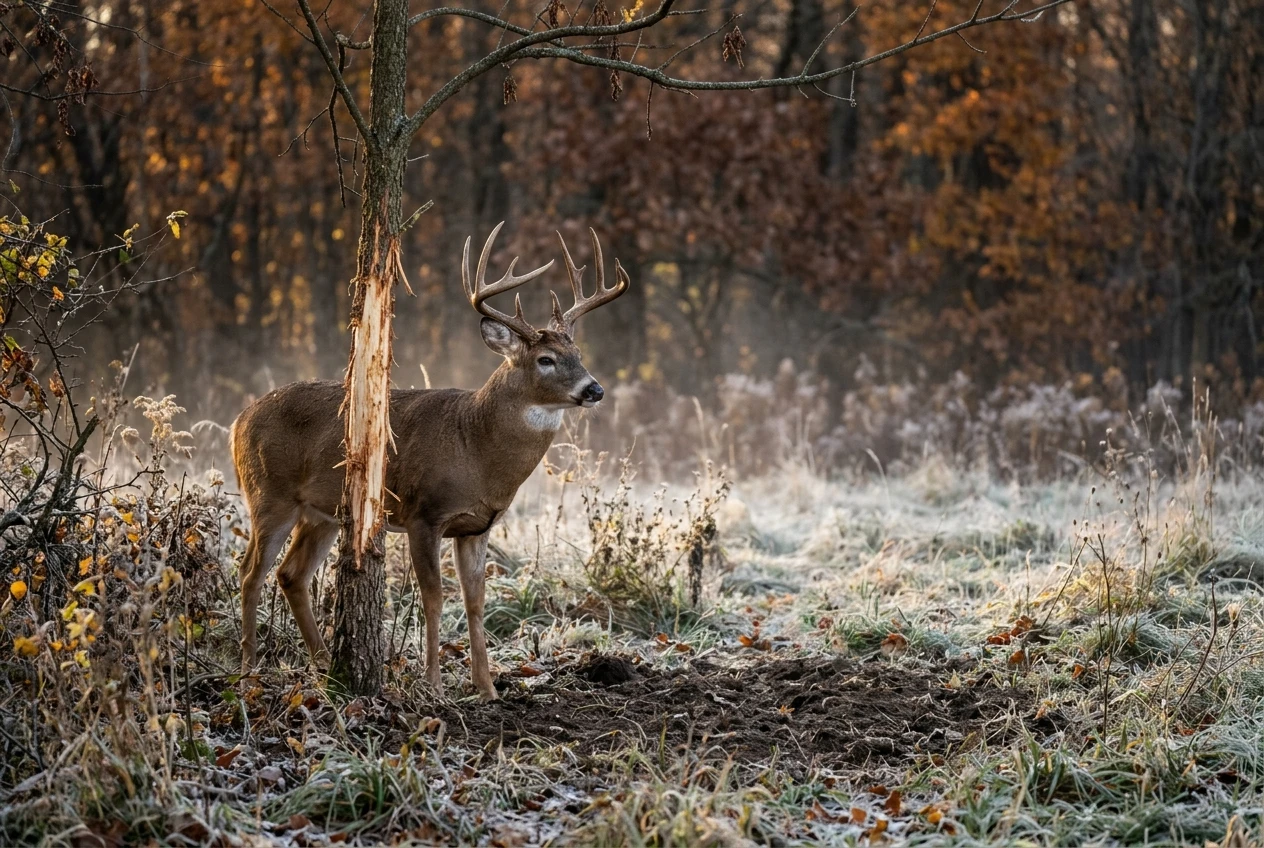
- Pre-rut: Bucks are restless and start making rubs on small trees and scrapes on the ground. Does are not ready to breed yet, so bucks mostly look and test.
- Seeking: Bucks cover more ground in search of does that are close to coming into heat. They move more in daylight than they did a few weeks earlier.
- Chasing: Some does are now ready to breed, and bucks follow them, often at a run. This is the phase where you are most likely to see a buck in the open in the middle of the day.
- Lockdown: A buck finds a doe that is in heat and stays with her, often in thick cover, for a day or so. Daytime sightings of bucks can drop sharply even though breeding is at its peak.
- Post-rut: Most breeding is finished. Bucks are worn down, eat heavily, and move less. Deer movement is tied to food and cover again.
Some hunters also describe a smaller second rut, when does that were not bred the first time come back into heat. How noticeable it is depends on the area, so treat it as a possibility and not something to plan around.
How to Find the Rut Window Where You Hunt
You do not need to guess. Three sources, used together, will get you close.
Your state wildlife agency
Start with your state’s wildlife agency website. Some agencies publish breeding or rut timing for their deer herds, and many biologists will answer a phone call or email about it. Even if there is no formal rut chart, the agency can tell you what is typical for your region.
Trail cameras
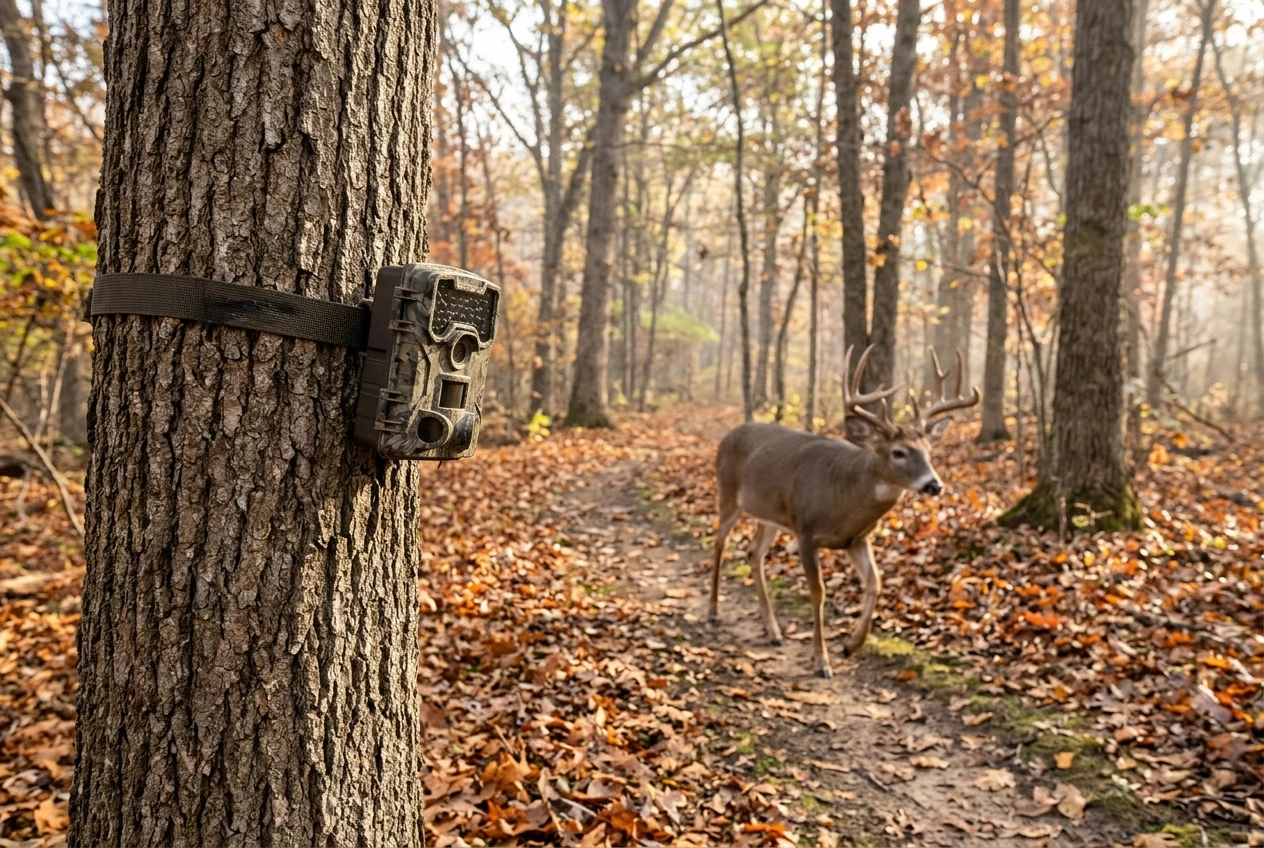
If cameras are legal where you hunt, they show you what is happening on your ground. Check your state’s rules and the rules of the land first, because some places restrict them, especially on public land. Watch for changes: bucks that were only showing up at night starting to appear in daylight, bucks traveling alone and fast, and bucks following does.
Local hunters
Archery shops, processors, and check stations are full of people who have hunted your county for years. Ask when they usually see bucks chasing, and when things go quiet. Most hunters like to talk about this, and a beginner who asks a polite question tends to get a useful answer.
If you are scouting on foot, fresh rubs and scrapes tell you bucks are active in the area, and they tend to multiply as the rut approaches.
What a Beginner Should Do in the Stand During Each Phase
The rut gives you more chances to see a buck, but only if you are in the right place and stay put long enough. Here is how to adjust.
Pre-rut. Deer are still tied to food. Set up near a feeding area, such as a field edge, an oak flat with acorns on the ground, or a crop field where you have permission. Evening sits are often better than mornings, since deer come out to feed late in the day.
Seeking. Move your attention toward travel routes. Look for funnels where terrain pushes deer together: a gap in a fence line, a narrow strip of timber between two fields, or the edge of a thicket. Bucks cruising for does tend to use these.
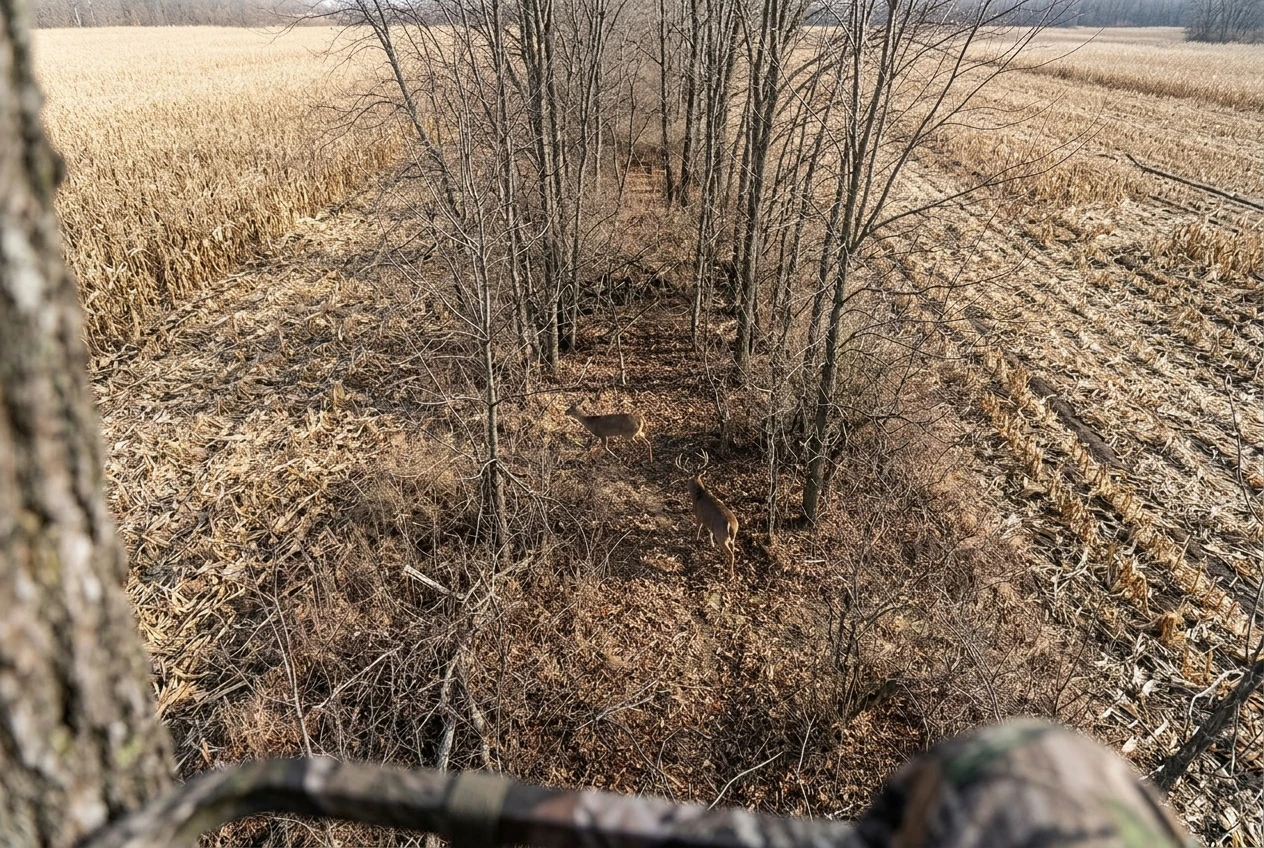
Chasing. Sit all day if you can. A buck chasing a doe may come through at 11 a.m., and a hunter who left for lunch will miss it. Stay alert. Deer move fast in this phase, and you need to be ready to make a clear, ethical decision about a shot, or to pass if it is not there.
Lockdown. Sightings of bucks usually drop. Hunt near thick bedding cover, where does hold up and bucks stay with them. You will see fewer deer, so patience matters more than movement. This is also a good time to see does, which in many areas is useful for filling a tag.
Post-rut. Go back to food. Bucks are tired and hungry, and the best spots are often south-facing slopes, late crops, or remaining mast in cold weather. Cold snaps can improve movement.
Rut Myths That Send First-Timers Home Early
A few ideas circulate every fall and cause beginners to give up too soon.
“If I’m not seeing bucks, the rut is over.” During lockdown, bucks are with does in thick cover and are hard to see even at peak breeding. Seeing fewer bucks does not mean the rut ended.
“The rut is only a few days.” Breeding peaks within a short span, but the phases around it run for weeks. Activity builds before the peak and fades after it.
“The moon tells you the exact day to hunt.” This is the one hunters argue about most. Breeding timing follows daylight length more than the moon, so the moon cannot tell you when the rut starts in your area. Some hunters believe moon phase affects when deer move during the day or how their activity is spread between dawn, dusk, and night, but the evidence is mixed and your own observations are a better guide. Treat the moon as a minor factor at best, and do not skip a sit you can take because the moon looks wrong.
“Bucks only move at dawn and dusk.” Dawn and dusk are good, but during the seeking and chasing phases, midday movement increases. Hunters who leave at 10 a.m. may be leaving just before the best window.
“I need a big buck or the sit was wasted.” Seeing deer, learning how they move, and practicing patience in the stand are the work of a first season. If your tag and local rules allow a doe, that is a legitimate hunt too.
How to Plan Your Days Off and Your Sits
If you can only hunt a handful of times, spend them where the odds are best.
- Find your window first. Use the agency, camera, and local-hunter information above to identify when seeking and chasing usually occur in your area.
- Put your days off around that window. Seeking and chasing phases are typically the best days for a first-timer to see a buck moving in daylight. If your area has a lockdown stretch right after, keep a couple of days for that too.
- Sit long. On a rut day, a full day in the stand beats two short sits. If you cannot stay all day, choose the morning or the late afternoon through dark.
- Keep a backup day. Weather can change plans. A cold front on a day you already have off is a better day to hunt than a warm one.
- Pay attention to wind. Deer smell you long before they see you. Pick the stand that works with the wind direction that day.
If your state’s season includes different weapon periods, such as archery and gun, remember that the rut may fall in only one of them where you live. That affects which weeks are worth taking off.
What If You Haven’t Got Your License or Scouting Done Yet
Seasons are already underway in many places as of early November, so take care of the basics before you plan around the rut. You cannot hunt without a license, and in most states a first-time hunter needs to complete hunter education before buying one. Our guide on how to get a deer hunting license covers hunter ed, tags, and costs.
You also need somewhere to hunt. If you do not have private land or permission, public land can work well, but it takes scouting to find a spot away from the crowds. The guide on how to find public land to hunt deer walks through finding it and scouting it before you sit.
If you are short on time, a few hours spent looking for rubs, scrapes, trails, and food sources will help more than a whole day sitting in a spot you have never seen.
Staying Patient and Safe When Deer Are Moving and Hunters Are Everywhere
The rut is also the busiest time in the woods. More hunters are out, and deer pushed by one hunter may walk toward another. Plan for that.
- Wear the required orange. Check your state’s blaze orange rules for the weapon you are using and follow them exactly.
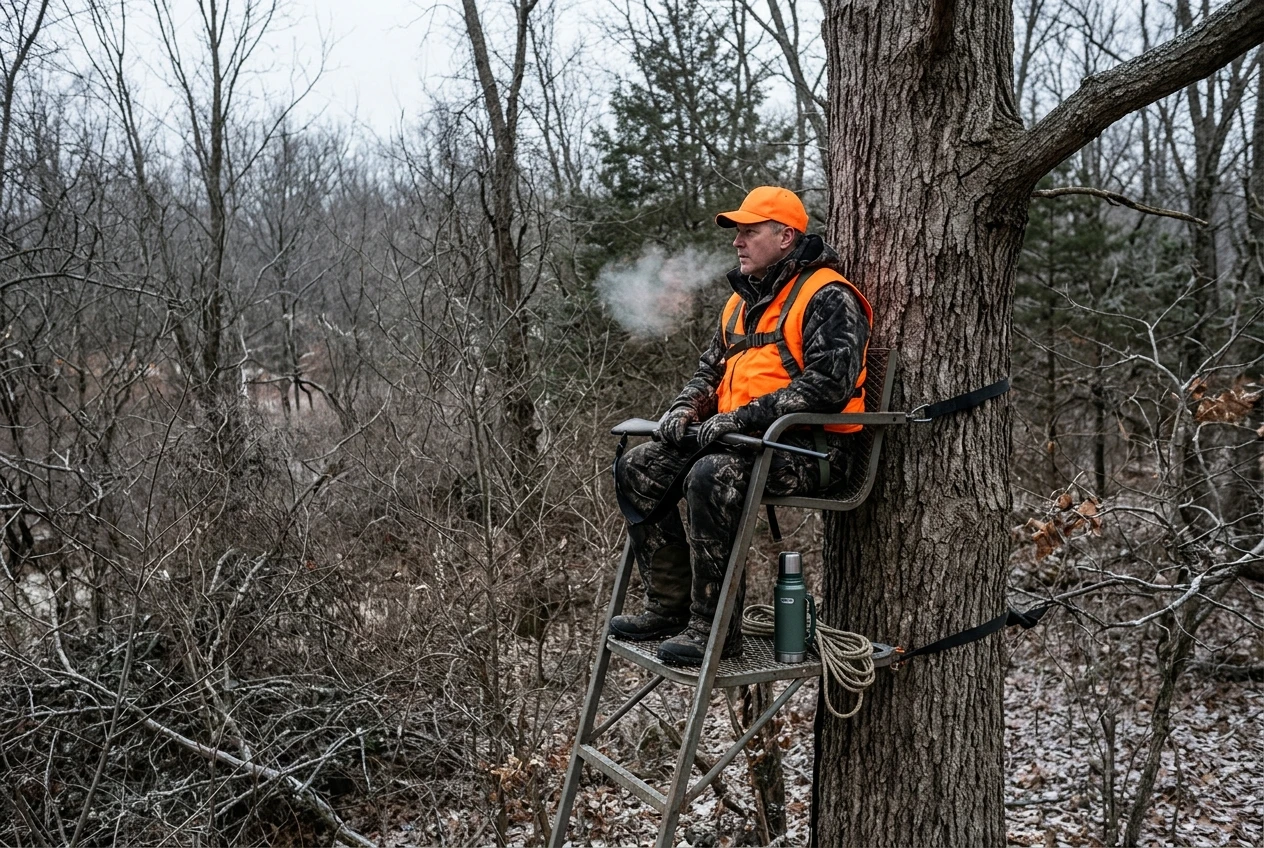
- Use a safety harness in any elevated stand, and keep it on from the moment you leave the ground until you are back on it. Raise and lower your firearm or bow with a rope, with the firearm unloaded.
- Identify your target fully before you shoot, and know what is behind it. Chasing deer move fast, and rushed shots are how mistakes happen.
- Tell someone where you will be and when you expect to be back.
- Expect other hunters. Do not assume the woods are empty because you have not seen anyone. Stay in your stand, and do not move toward a shot you hear.
Patience is part of safety. You will probably sit through hours when nothing appears. Dress warmly, bring food and water, and stay put through the slow stretches. Rut movement can show up in a few minutes after hours of nothing, and hunters who are cold, hungry, or distracted are the ones who miss it.
Before your next sit, run through the beginner deer hunting gear list so you are not caught cold, wet, or underequipped during the busiest weeks of the season.