The honest answer to what you need to start deer hunting is shorter than any catalog suggests. You need to be legal, safe, able to make a clean shot, warm enough to sit still for hours, and ready to get the animal out of the woods if you succeed. Everything else is optional, and most of it can wait.
Your choice of hunting weapon also determines the equipment you’ll need and the regulations you’ll have to follow. If you’re considering an air rifle instead of a traditional firearm, our guide on Air Rifle Deer Hunting: Best Rifles, Gear, and Legal Tips for Ethical Success explains the rifle options, essential accessories, legal restrictions, and ethical considerations involved.
This article sorts gear by timing instead of by category. Some items must be in hand before opening day. Some you can borrow or buy used. Some are worth skipping until you have a season behind you and know what you actually missed.
Start with what the hunt requires, not what the catalog sells
A hunt asks four things of you. You have to be allowed to be there, put a deer down quickly and humanely, stay out in the weather long enough for a deer to walk by, and handle the animal afterward. Gear earns its place by serving one of those four.
Retail works the other way around. A store shelf is organized around products that sell, and the loudest ones are scent eliminators, camera setups, calls and camouflage patterns with clever names. None of those is on the list of what the hunt requires.
When you are unsure about an item, ask which of the four jobs it does. If you cannot answer, it goes in the season-two pile.
Buy before opening day: safety, legal and comfort basics
Some things are not negotiable, and the first few are not products at all.
- Hunter education and a license. Most states require proof of hunter education for first-time hunters, and the rules differ by state and by age. You also need the correct license and tags for your season and zone. The full process is in our guide on how to get a deer hunting license.
- Blaze orange where your state requires it. Requirements vary by state, by season and sometimes by weapon. Read your state’s current regulations and buy to match them.
- A way to carry and store your firearm or bow safely. That means a case or sling for transport and a safe, locked place at home.
- A sharp knife and a few basics for after the shot. More on this below.
- Boots and layers you have already worn. Comfort is a safety issue, because a cold hunter leaves early or makes poor decisions.
Notice what is missing: nothing on that list is expensive by nature, and none of it needs a brand name. It needs to work and fit.
What do you need to start deer hunting?
Put as a checklist, here is the minimum for a first season:
- Completed hunter education, if your state requires it for you.
- A valid license and the right tag for your season, zone and method.
- A legal, reliable weapon you have practiced with.
- Ammunition or arrows matched to that weapon and to local rules.
- Blaze orange or other required visibility gear.
- Clothing that keeps you warm and dry while sitting still.
- A knife, gloves and a plan for field dressing.
- Somewhere to hunt, with permission if it is private land.
- A plan for getting the deer out and to a cooler or processor.
That is the whole list. Items 8 and 9 get left off the shopping list because you cannot buy your way out of them. Land access and a recovery plan are decisions, and they belong in your planning before you spend anything on equipment.
Your first rifle or bow: choose what fits and what you can shoot well
The weapon is the biggest single purchase for most beginners, and it is where people are most often talked into too much. The right choice is the one that is legal where you will hunt, fits your body, and that you can shoot accurately without flinching.
Start with your local rules. Some states or zones limit which firearms or cartridges are allowed for deer, and bow seasons carry their own requirements. Confirm those before you shop. Then think about the cartridge. Our piece on good deer hunting calibers explains how to match a cartridge to the game and the distances you will realistically shoot.
Fit matters as much as caliber. A rifle with a stock that is too long makes you shoot worse, and recoil you dread builds a flinch. If you can, shoot a few different rifles before choosing, or ask an experienced hunter to let you try theirs at a range.
If you are considering a bow, be honest about the time it takes. A bow demands regular practice, and you have to be accurate at the distances you will really get. Getting fitted at an archery shop and practicing for weeks before the season matters more than any accessory.
Whichever you pick, budget for practice ammunition or arrows. Sighting in and shooting at a range before opening day is part of the weapon’s cost. A cheaper weapon you have practiced with beats an expensive one you have barely fired.
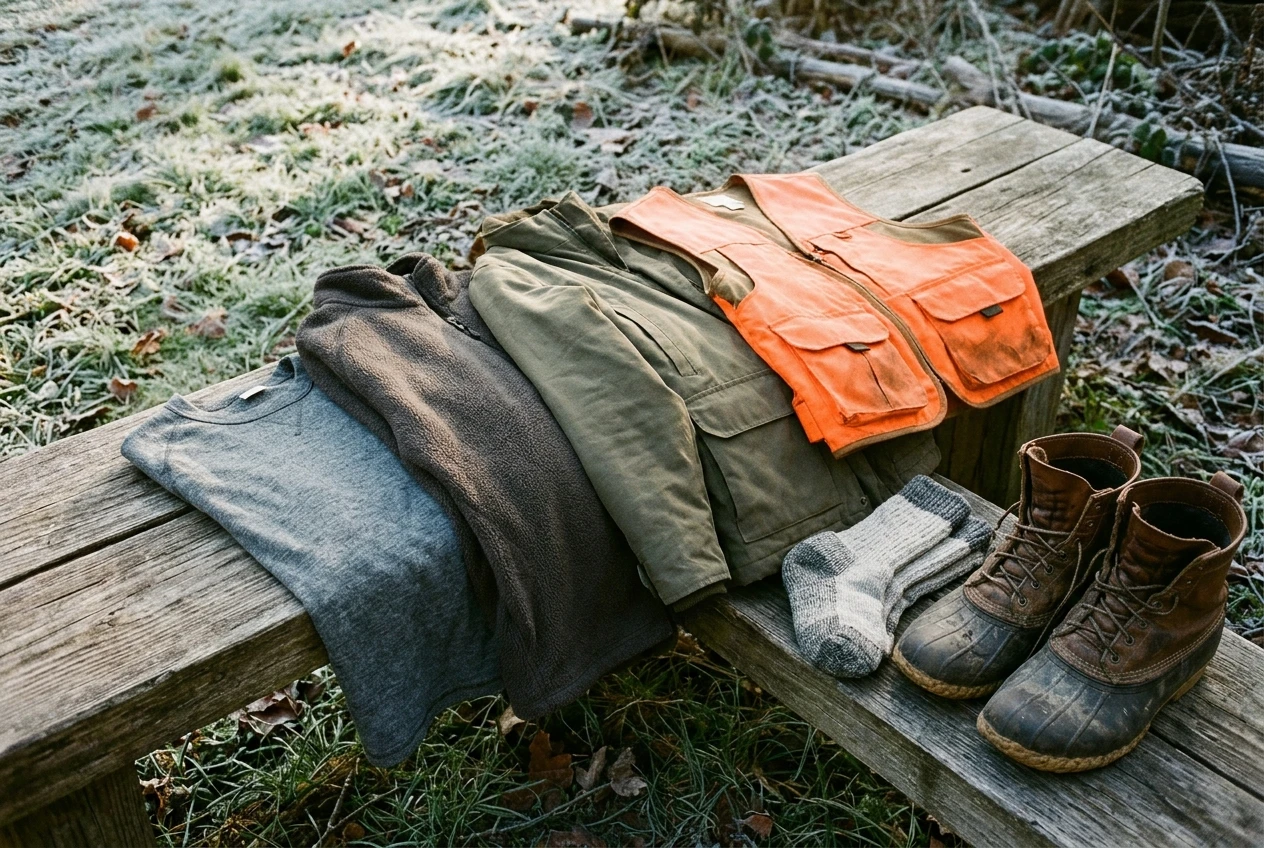
Clothing for sitting still: layers, boots and blaze orange done sensibly
Deer hunting is mostly sitting. You walk in, settle, and stay quiet for hours, so your body produces little heat while the cold works on you. Clothing for a brisk hike will not keep you warm on a stand.
Build in layers that you can add or remove:
- Base layer: wicking fabric against the skin. Cotton holds moisture and chills you once you stop moving, so leave it at home.
- Insulating layer: wool or fleece that traps warmth without much bulk.
- Outer layer: quiet fabric that blocks wind and sheds light rain. Noisy, stiff jackets are a problem when every rustle can be heard.
Walk to your spot in lighter layers so you do not sweat, then put the warm layers on when you arrive. Damp clothing is the main reason beginners get cold.
Boots deserve more attention than almost anything else you wear. Cold feet end hunts. Buy boots that fit with the socks you will actually wear, and break them in on walks before the season. Bring extra socks.
For blaze orange, follow your state’s rules on how much and what kind, since they differ. You do not need camouflage on top of it. Deer rely heavily on movement and scent, so staying still and managing wind will do more for you than a pattern.
Borrow it, rent it or buy it used: gear that does not need to be new
A lot of hunting equipment holds up well and works as well secondhand as new. Hunters tend to keep gear for years, and many have extras in a closet.
Good candidates to borrow or buy used:
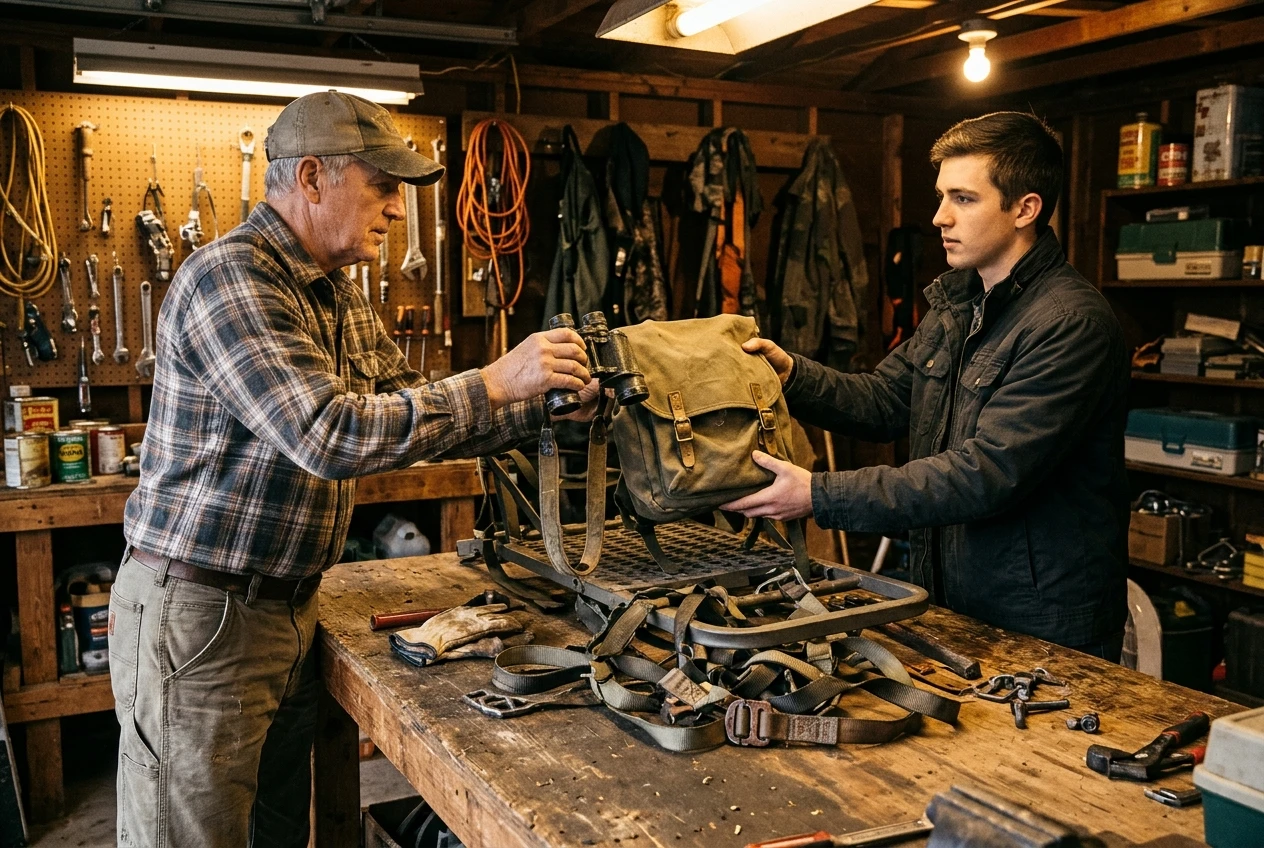
- Binoculars. They help you identify animals and scan terrain, and a basic pair is enough to start.
- A rangefinder. Useful for judging distance, and a friend may lend one for a weekend.
- Backpacks and day packs. Any sturdy pack that carries your layers, water and tools will do.
- Seat cushions, folding stools and shooting sticks. Simple items with little difference between new and old.
- Tree stands or ground seats. If you buy a used stand, inspect straps, welds and hardware carefully, and replace any worn safety components. Follow the manufacturer’s guidance for safety harnesses, and do not use a stand you are not sure about.
- Rifle or bow. A used firearm from a reputable seller or shop can be a sound choice. Have a knowledgeable person look it over, and check local rules on transfers.
Ask around before buying. Experienced hunters are usually glad to help a newcomer, and loaning a piece of gear is an easy way for them to do it. A local archery shop or sporting goods store may also rent items you only need once.
Not everything should be bought used. Safety harnesses and any equipment that has been through a fall or heavy damage deserve a new purchase, as do boots that do not fit your feet.
Skip it this year: the gadgets and extras that can wait until season two
The extras are where first-season budgets disappear. These items are not useless, but none of them is needed to hunt legally and ethically, and you will choose better after a season of experience.
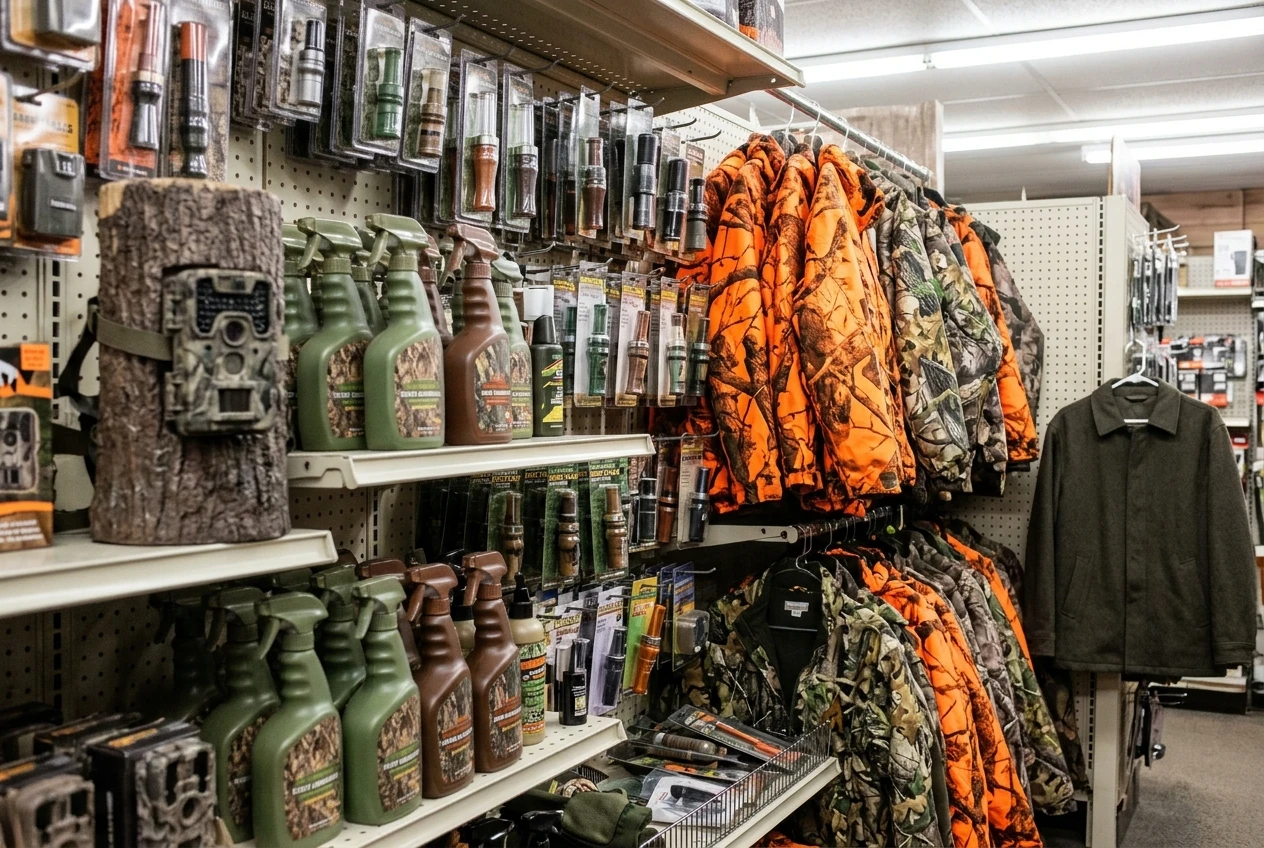
- Scent-control sprays and elimination systems. Wind direction matters far more than a product. Learn to hunt with the wind first.
- Trail cameras. They are useful for scouting, but they add cost, setup time and a learning curve. If you are hunting new ground, your first season is better spent learning the land.
- Game calls and decoys. They take practice to use well, and used badly they can work against you.
- Specialty camouflage. One decent set of layers in muted colors is enough.
- Heated gear and electronics. Nice to have, but proper layering solves most of what they promise.
- Extra knives and tools. One good knife will do the job.
- Premium optics. A basic scope or binoculars you understand is better than top-end glass you cannot yet judge.
After your first season, you will know what you wished you had. Maybe it was a better seat, a warmer glove or a quieter pack. That list is worth far more than a guess made in a store aisle.
Field dressing and getting the deer home: the gear people forget until it is too late
Many beginners prepare carefully for the shot and not at all for the hour after it. A deer is heavy, and handling it takes more equipment than people expect.
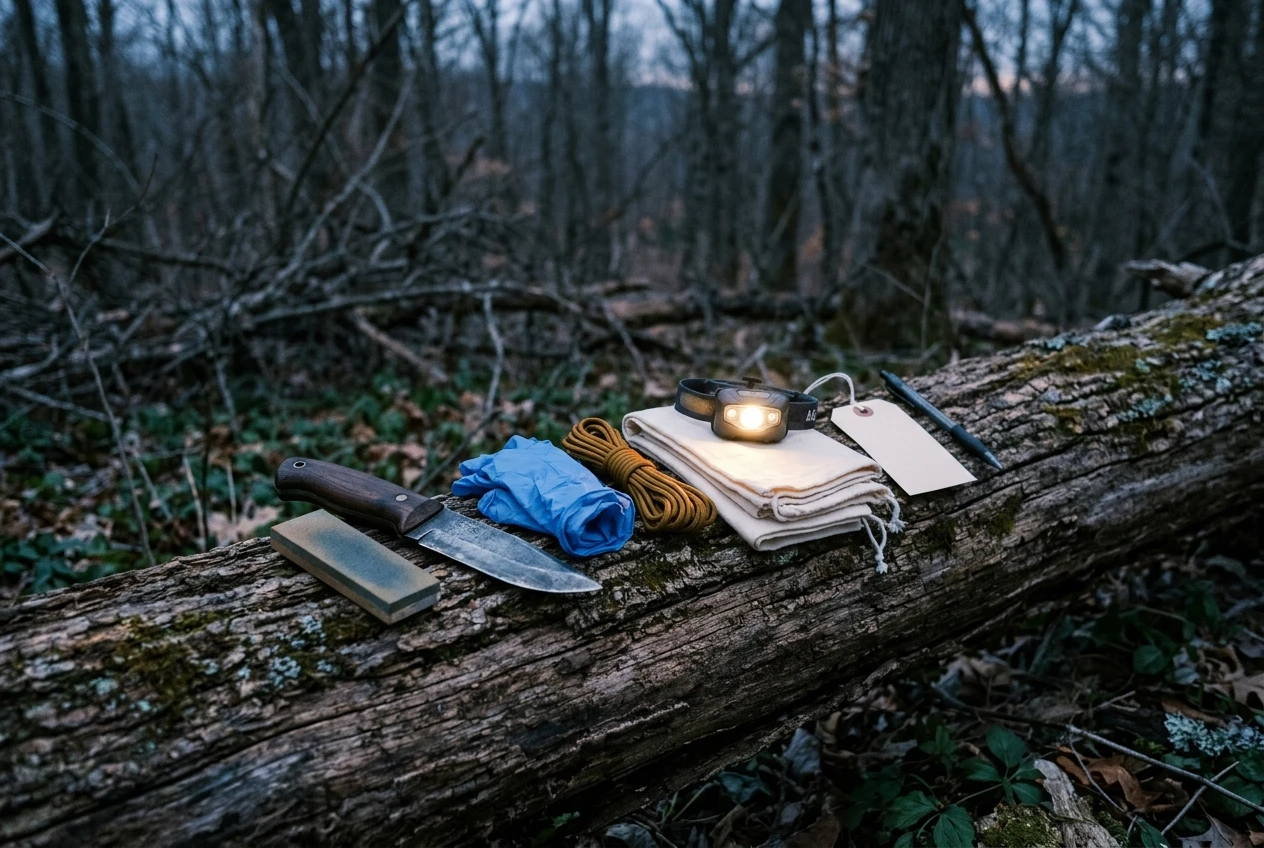
Pack a small kit in advance:
- A sharp knife, plus a way to keep it sharp.
- Disposable or reusable gloves for field dressing.
- A headlamp or flashlight, with spare batteries, because recovery often runs past dark.
- Rope or a drag strap to move the deer.
- Game bags or clean bags to keep meat clean.
- Paper towels or rags and water for cleanup.
- Your tag and a pen, so you can attach and fill in the tag as your state requires.
Beyond the kit, plan the logistics. Decide how you will get the deer to your vehicle, how you will transport it where it is legal to do so, and where it will be kept cool until it is processed. Line up a processor or a friend who can help before the season starts, since good processors often book up. If this is your first deer, ask an experienced hunter to walk you through field dressing before you need to do it alone.
A simple order to spend in, and where the full list and licensing steps live
If you are staring at a budget and a long list, spend in this order:
- Education and license. Nothing else matters without them. The details are in our guide on how to get a deer hunting license.
- Weapon and practice. Buy or borrow something legal and comfortable, then shoot it until you are confident.
- Boots and layers. Warmth keeps you in the woods.
- Blaze orange and safety gear. Match your state’s rules.
- Field dressing kit and recovery plan. Do this before the season, not after the shot.
- Everything else, used or borrowed where possible.
- Extras, after the season.
Our full gear list covers specific items in each category, while this article tells you when to deal with them. Use the two together, and keep each purchase tied to one of the four jobs the hunt asks of you.
Ready to pick actual items? Read the full Beginner Deer Hunting Gear List, then walk through the rest of your season in Your First Deer Season, Step by Step.
Frequently Asked Questions
What is the bare minimum gear to start deer hunting?
You need a legal weapon and ammunition or arrows, your license and tag, required blaze orange, clothing that keeps you warm while sitting, and a knife and basic field dressing supplies. You also need land to hunt and a plan to get the deer home.
Do I need to buy everything new?
No. Binoculars, packs, seats and sometimes a rifle can be borrowed or bought used. Buy new where safety is involved, such as harnesses, and where fit matters, such as boots.
Should I buy a rifle or a bow first?
Pick the one that is legal for the season you want to hunt and that you can shoot accurately. A rifle usually has a shorter learning curve, while a bow takes more practice and may have its own education requirements in your state. Check your local regulations first.
How much should I spend on my first season?
That depends on what you already own and what you can borrow, so no single number fits everyone. Spend first on the license, a weapon you can shoot well, and warm clothing and boots. Hold off on gadgets until you have a season of experience.
Do I need camouflage?
Not necessarily. Many hunters get by with muted clothing, and blaze orange is required in many places during firearm seasons. Your state’s rules decide what you must wear, and staying still and watching the wind matter more than pattern.
What gear do beginners forget most often?
A headlamp, gloves, a way to drag or carry the deer, and a plan for keeping the meat cool. These are small items, but missing them turns a successful hunt into a difficult evening.